Food Traceability Software and Hardware for FSMA 204: A 2026 Buyer’s Guide
Posted by Advanced Automation on Jan 27th 2026
Compliance · FSMA 204 Traceability | By Advanced Automation
Updated November 3, 2026 · First published January 27, 2026
In This Post
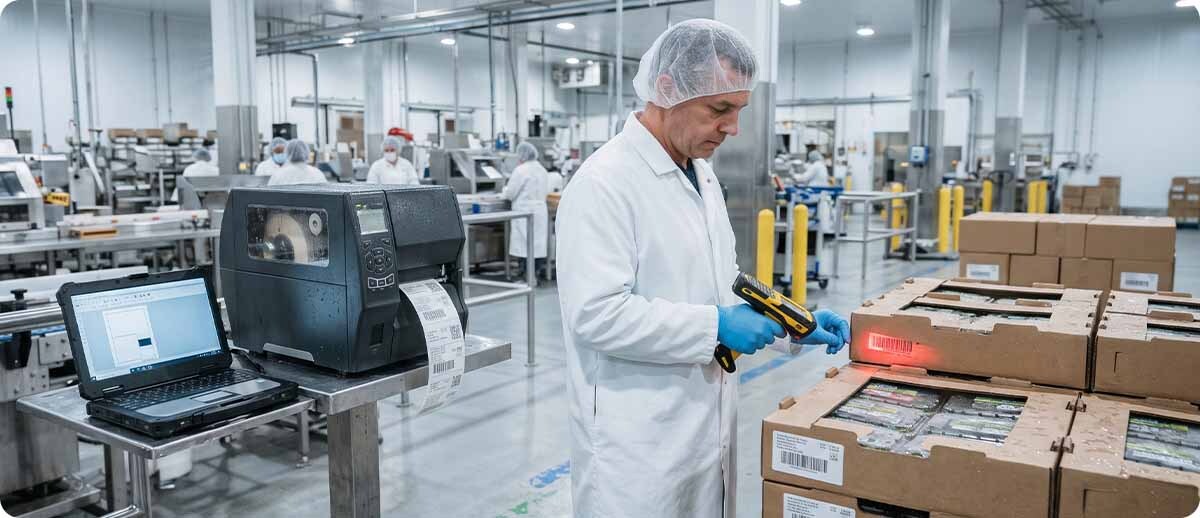
FSMA 204 turns every case label in a food plant into a traceability record. Getting there takes three things working together: software that builds the label from your data, a system that stores the records, and hardware that prints and scans reliably on a cold, wet floor. Here's how food traceability software fits in, how BarTender and Loftware compare, and which printers and mobile computers hold up.
What's New in This Update
- Deadline status: Congress has blocked FDA from enforcing FSMA 204 before July 20, 2028, and FDA's fall 2026 actions are covered below.
- New BarTender vs. Loftware comparison table and guidance on when each one fits.
- Hardware picks reviewed: Honeywell's printers and mobile computers are now part of Brady, and we've updated the mobile computer lineup.
- A real example from an Iowa fresh herb grower we worked with.
FSMA 204 Key Facts
- Enforcement: FDA can't enforce the Food Traceability Rule before July 20, 2028.
- Who's covered: companies that make, pack, hold, or ship foods on FDA's Food Traceability List.
- The 24-hour rule: records must reach FDA within 24 hours of a request, and in an outbreak or recall that can mean an electronic, sortable spreadsheet.
- Retention: two years.
- Technology: FDA doesn't require specific software or hardware, but meeting 24 hours on paper is very hard.
For decades, food traceability ran on a simple idea: know who you bought from and who you sold to. That one-up, one-back model works fine until there's an outbreak and investigators need to trace a single lot of leafy greens through a dozen companies in a day. FSMA 204 is FDA's answer to that problem, and it's built on lot-level data that has to be captured, labeled, and retrievable fast.
Start Here
What Food Traceability Software Actually Does
What Is Food Traceability Software?
Food traceability software captures, links, and reports the lot-level data that follows a food product from where it was grown or made to where it was sold. For FSMA 204, that means recording key data elements at each critical tracking event, tying them together with a traceability lot code, and producing those records for FDA within 24 hours. In most operations, it isn't one program. It's three layers working together:
Layer 1 · Labels
Label Software
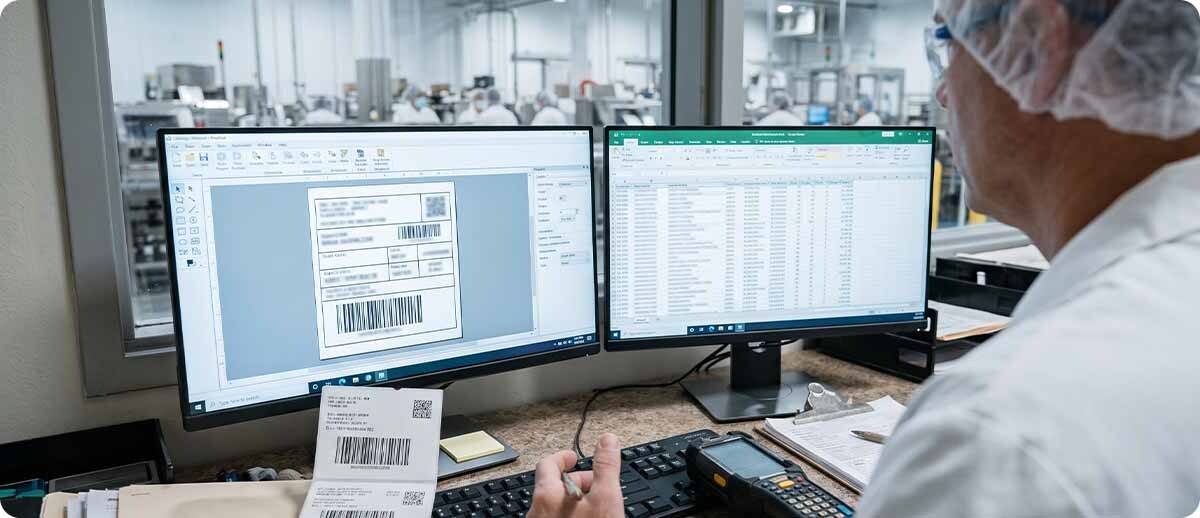
BarTender or Loftware builds each case label from your data: product, GTIN, lot code, and dates, encoded in a GS1-128 or 2D barcode. This is where lot codes get printed correctly every time.
Learn more →Layer 2 · Records
ERP, WMS, or Traceability Platform
Stores every receiving, transformation, and shipping record, links input lots to output lots, and builds the sortable spreadsheet FDA can request. This is where lot tracking software lives.
Layer 3 · Capture
Printers and Mobile Computers
Industrial printers print the label and rugged mobile computers scan it at every handoff, so data enters the system the moment it happens instead of hours later from a clipboard.
Learn more →Label software doesn't replace your traceability records system, and your records system can't print a compliant label on its own. FSMA 204 needs both, connected.
The Rule
Where FSMA 204 Stands in Late 2026
When Does FSMA 204 Take Effect?
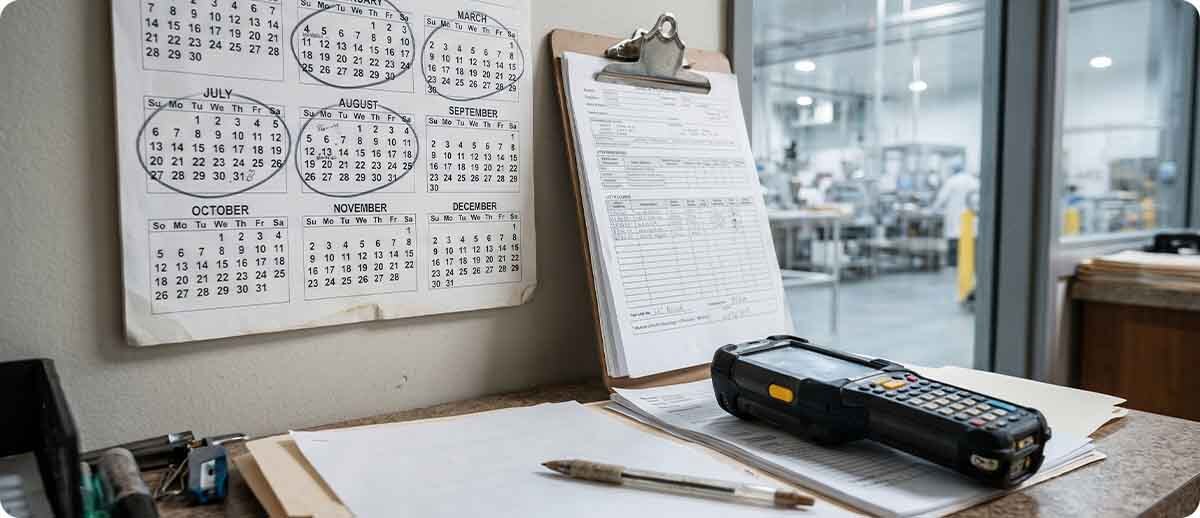
The original compliance date was January 20, 2026. FDA proposed moving it to July 20, 2028, and Congress has since barred FDA from using its funding to enforce the rule before that date. FDA says it will follow that directive. In October 2026, FDA also released a draft policy that would not enforce the rule for restaurants and retail food stores with $250,000 to $1 million in average annual food sales, and it scheduled a public meeting for November 6, 2026 on possible flexibilities in lot-level tracking. FDA's Food Traceability Rule page has the latest.
None of that changes what manufacturers, packers, and distributors have to record. And many retail and foodservice buyers are already asking suppliers for lot data now, which is the real deadline for a lot of companies.
What Records Does Your Software Need to Handle?
The rule covers foods on FDA's Food Traceability List, including leafy greens, fresh herbs, fresh-cut produce, shell eggs, nut butters, soft cheeses, seafood, and ready-to-eat deli salads. For those foods, your systems need to record key data elements (KDEs) at each critical tracking event (CTE): harvesting, cooling, initial packing, first land-based receiving, shipping, receiving, and transformation. The thread that ties it all together is the traceability lot code (TLC). GS1 US recommends building it from a GTIN plus a lot number, and its FSMA 204 resources explain how.
The hardest part for most companies is transformation: when you chop, mix, cook, or repack a listed food, you assign a new lot code, and your system has to remember which incoming lots went into it. That link is what lets an investigator trace a bagged salad back to the field.
Up Close
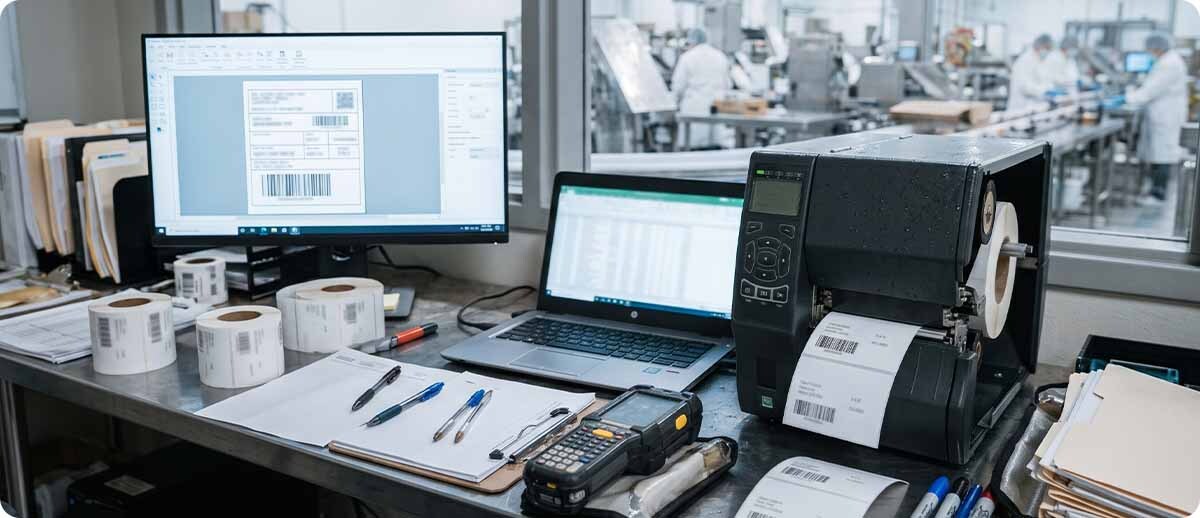
BarTender and Loftware for Food Traceability Labeling
Compare
BarTender vs. Loftware for FSMA 204
How Do BarTender and Loftware Compare for Food Traceability?
| Criteria | BarTender | Loftware |
|---|---|---|
| Typical company size | Single site to midsize, multi-site with Enterprise | Multi-site and enterprise |
| Deployment | Installed on Windows, with a cloud option | Loftware Cloud subscription, or on-premises |
| Pulls data from ERP or WMS | Yes, with Automation or Enterprise | Yes, including SAP integration on higher tiers |
| Central template control across plants | Enterprise edition | Built into the platform |
| Approvals and audit trail | Enterprise edition | Higher tiers such as Compliance |
| GS1-128, DataMatrix, QR | Yes | Yes |
| How it's licensed | By printer count, on 1-year or multi-year terms | Subscription, by printer count and tier |
| Best fit | Packers and processors that want flexible, ERP-driven labeling | Multi-plant companies that need one controlled label standard |
On a phone, swipe the table sideways to see every column.
Hardware
Printers and Mobile Computers for the Food Plant Floor
Which Printers Hold Up for Lot Code Labels?
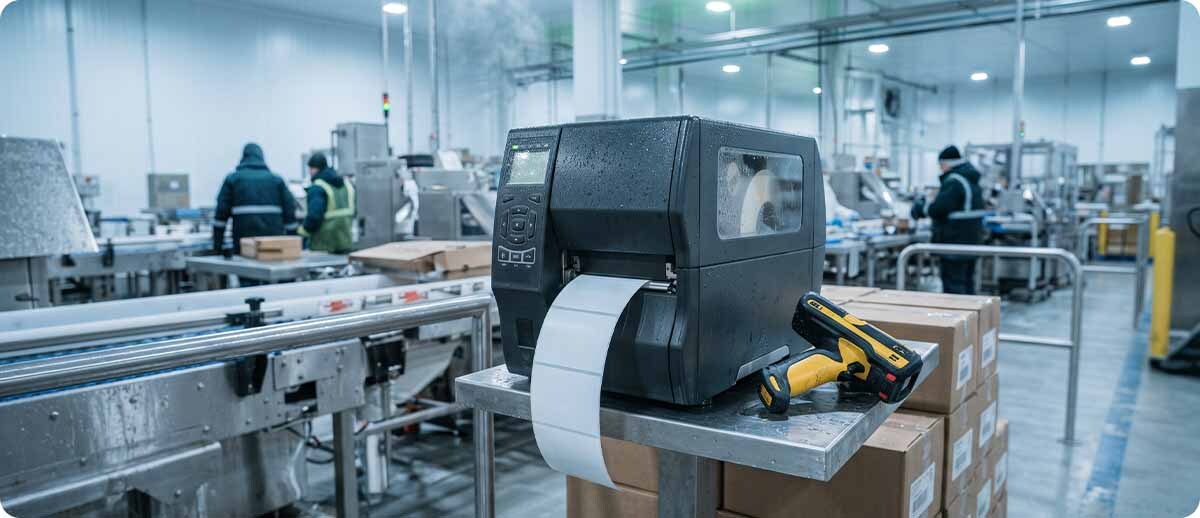
Use thermal transfer, not direct thermal, for anything going into a cooler, freezer, or long storage. Direct thermal labels can fade with heat and light and scuff in transit, and a lot code that won't scan doesn't do much for traceability. Our posts on whether barcode labels expire and ribbon chemistry cover how to pick the right combination.
Mid volume
Zebra ZT411 / ZT421
The standard industrial printer for case labels on a packing line. Available with RFID encoding if your customers ask for it, and the ZT421 handles 6-inch labels.
Learn more →High volume
Zebra ZT610 / ZT620
Built for nonstop production lines printing case and pallet labels across multiple shifts.
Learn more →Alternative
Honeywell PM45 / PM65
A strong mid-range industrial line. Honeywell's printer business is now part of Brady, and the printers remain available.
Learn more →Which Mobile Computers Work at Receiving and Shipping?
Freezers and docks
Zebra MC9400 / MC9450
A pistol-grip mobile computer with standard, freezer, and hazardous-location versions, built for long-range scanning on docks and in cold storage.
Learn more →All-touch
Zebra TC701
Zebra's AI-ready TC7 series mobile computer, rugged enough for the plant floor. Read our TC701 review.
Alternative
Honeywell CT47
A rugged all-touch mobile computer from Honeywell, now part of Brady. See our CT47 overview.
Decide
Which Setup Fits Your Operation?
Best fit · BarTender
When Does BarTender Make the Most Sense?
Choose BarTender when you run one plant or a few, your ERP or WMS already holds the product and lot data, and you want labels that print automatically from that data without hand entry. It's flexible, widely supported, and BarTender Automation covers what most produce packers and midsize processors need for FSMA 204 labeling.
Best fit · Loftware
When Does Loftware Make the Most Sense?
Choose Loftware when you run several plants that need to print from one approved label standard, when label changes need sign-off before they go live, or when you're already on SAP. Central control is the whole point: one change, every plant, the same day.
Check this first
When Is Your Records System the Bigger Gap?
If you can't yet answer "which incoming lots went into this outgoing lot?" from your ERP or WMS, start there. Label software prints what your system knows. If the link between lots isn't stored anywhere, no label will fix it. Our post on WMS and barcode hardware communication covers the most common break points.
Roll Out
A Four-Step Plan for Traceability Labeling
How Should You Roll Out FSMA 204 Labeling?
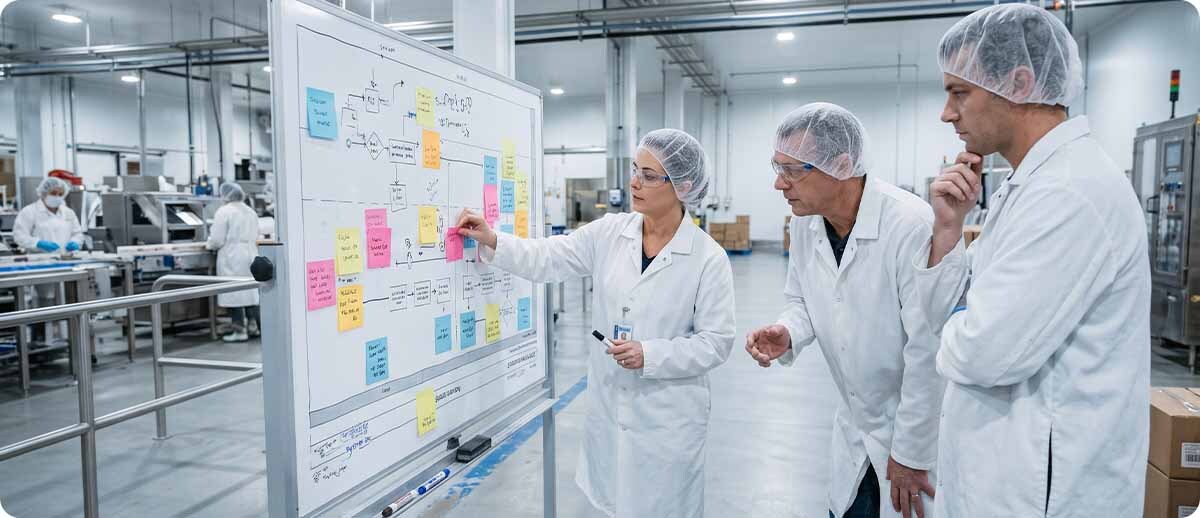
- Find the gaps. Walk each tracking event and mark where lot codes are handwritten, typed in, or stuck in a spreadsheet that doesn't connect to anything.
- Standardize the data. Agree with suppliers and customers on lot code format and how data is exchanged. GTIN plus lot is the safest default.
- Connect the label software. Set up BarTender or Loftware to pull from your ERP or WMS so every label prints from the system of record.
- Run a mock recall. Pick a lot at random and see if you can produce a sortable spreadsheet of its full history in under 24 hours. Fix what breaks, then do it again.
FAQ
Quick Questions
Does FSMA 204 Require Special Software?
No. FDA doesn't require any specific software or technology. In practice, though, producing a sortable spreadsheet for a lot within 24 hours is very hard without lot tracking software connected to scanning and label printing.
Can BarTender or Loftware Produce the FDA Spreadsheet on Their Own?
Usually not. Label software prints the lot code and can log print history, but the full chain of records (which lots came in, which went into each new lot, and where each one shipped) normally lives in your ERP, WMS, or a dedicated traceability platform. The label software and the records system work as a pair.
Which Barcode Should Carry the Lot Code?
GS1-128 is the standard for cases and pallets and what most receiving docks scan today. 2D barcodes such as GS1 DataMatrix and QR codes with GS1 Digital Link can carry the same data and more, and they're gaining ground with GS1's Sunrise 2027 push. Our GS1 Sunrise 2027 guide explains the shift.
Does Honeywell Becoming Brady Affect My Printers or Scanners?
Not in day-to-day use. Brady completed its purchase of Honeywell's productivity solutions business in 2026, and the products and support continue. Product names and part numbers may change over time, so keep your model and serial numbers handy when you order supplies or service.
FSMA 204 makes the label the first link in a food safety record, and the label is only as good as the data and hardware behind it. If you're sorting out label software, printers, or mobile computers for traceability, tell us how your plant runs today and where lot codes come from, and we'll help you find the gaps and the right fit. You can also browse our barcode and labeling software and rugged mobile computers.
Keep Reading
Customers Also Checked These Out
Barcode Standards
GS1 Sunrise 2027: What the 2D Barcode Transition Actually Means for Your Operation
Read the post →