
Zebra TC701 Review: The AI-Powered TC7 That's Actually Worth Talking About
Posted by Advanced Automation on Apr 28th 2026

By Advanced Automation, Inc. | Mobile Computers | Posted April 2026
We've spent time with the TC701's spec sheet, put it alongside the TC73/TC78 it's meant to succeed in the premium tier, and thought hard about which operations it's actually right for. Because "most powerful TC7 ever" is a true statement, and it's also not the complete story. Let us walk you through what actually matters about this device and who should seriously consider it versus who should save the budget.
The Processor: Why This One Actually Matters
Every new device launch comes with processor claims. The TC701's Qualcomm Dragonwing Q-6690 is worth paying attention to, for a specific reason: it has a dedicated neural processing unit built into the chip itself. Not "AI-capable" in the marketing sense of the term. An actual dedicated AI engine that runs machine learning inference locally, on the device, without touching a network.
Zebra is citing up to 300% performance improvement over legacy TC7 devices, meaning the TC73 and TC78 that most operations are currently running or evaluating. The processing efficiency gain also matters: the Dragonwing chip does more work per watt than its predecessors, which means the battery isn't being taxed proportionally to the performance increase. You get the extra compute without giving up the shift-length battery life you need.
The memory spec reinforces the point: up to 12GB of LPDDR5 RAM and 256GB of UFS 3.1 Flash, three times the RAM and eight times the Flash storage of legacy TC7 models. The TC73 tops out at 8GB RAM and 128GB storage. That gap matters when you're running applications that maintain large working data sets, process camera feeds, or handle simultaneous RFID reads and barcode scans alongside a WMS session.
If your current workflows don't require any of that, if your workers run one WMS app, scan barcodes, and that's it, the processor upgrade is largely invisible to the user experience. The Dragonwing Q-6690 earns its premium in operations that are actually going to run AI workloads, multi-modal data capture, or complex applications. For standard pick-confirm-move workflows, the TC73/TC78's Qualcomm 6490 is plenty.
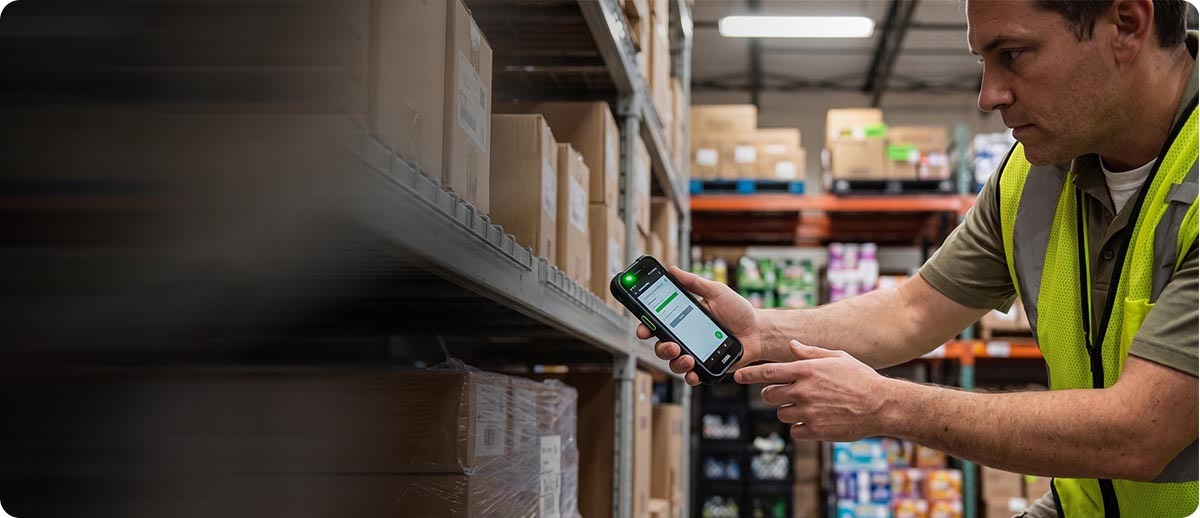
Integrated RFID: The Feature That Changes the ROI Conversation
Integrated UHF RFID is standard on all TC701 configurations. Not an optional add-on sled. Not a separate accessory that costs several hundred dollars and makes the device bulky. The RFID reader is built into the body of every TC701 shipped.
The reader handles up to 200 RFID tags per second at short range, useful for inventory counting scenarios where a worker sweeps a shelf or pallet and the device captures every tagged item in a single pass. For operations doing regular cycle counts on RFID-tagged inventory, asset tracking, or pharmaceutical authentication, this eliminates the sled entirely and puts RFID in the hands of every worker carrying a TC701 without any additional hardware procurement or accessory management.
The TC73 and TC78 don't have integrated RFID. RFID capability on those devices requires an optional holder that adds cost, weight, and a physical accessory to manage. If RFID is part of your workflow now or on the near-term roadmap, the TC701's integrated reader is a genuine differentiator that affects the total cost of ownership calculation, not just the device purchase price.
If RFID isn't part of your workflow and you have no plans to add it, you're paying for a capability you won't use. That's a real consideration when weighing the TC701 against a TC73.
The Display: This Is a Genuine Upgrade
The TC701 ships with a 6-inch AMOLED Full HD+ display at 2160x1080, with 1500 nits peak brightness and Gorilla Glass Victus. The TC73/TC78 have a 6-inch FHD+ LCD, not AMOLED. That's not a marketing distinction. AMOLED produces deeper blacks, higher contrast ratios, and genuinely better readability in direct sunlight. At 1500 nits of peak brightness, the TC701's screen is usable outdoors in conditions where an LCD at the same brightness would wash out.
The adaptive refresh rate also matters operationally: the display adjusts its refresh rate based on what's being shown, reducing power consumption when the screen is displaying static content. For workers who spend time with the device on but showing a static pick instruction, this extends battery life incrementally without any user action.
Gorilla Glass Victus is the latest generation of Corning's cover glass, significantly more scratch and drop resistant than earlier Gorilla Glass generations. Combined with the TC701's ruggedness ratings (more on that below), the display is designed to hold up to the kind of treatment a device takes on a warehouse floor or a delivery route over a 4-5 year deployment lifecycle.
Scanning Options: Three Engines for Three Use Cases
The TC701 is available with three scan engine options — SR500, SR560, and AC670 — covering standard range through extended range. This is worth understanding at the configuration level because the scan engine affects the device price point and determines whether the TC701 fits your specific scanning environment.
The SR500 is the standard range engine, reliable 1D/2D scanning at typical arm's-length distances for retail, light warehouse, and field service applications where workers aren't scanning from a distance. The SR560 is the mid-range engine, better performance on damaged and low-contrast barcodes and extended reach for scanning barcodes at shelf-height or moderate distance. The AC670 is the advanced long range engine, up to 100 feet (30 meters), the same extended range capability that makes the TC701 viable in high-bay warehouse environments where workers need to scan rack labels from the floor.
The confirmed AA configuration, TC7010-041B2C00A1-NA, carries the SR560 imager with Time-of-Flight 3D sensor. The ToF sensor adds 3D depth sensing to the camera system, enabling applications like parcel dimensioning, spatial measurement, and 3D documentation without additional hardware. For T&L and field service operations measuring packages or documenting site conditions, this is a useful built-in capability. For warehouse operations that don't need dimensioning, it's a spec that comes along for the ride.
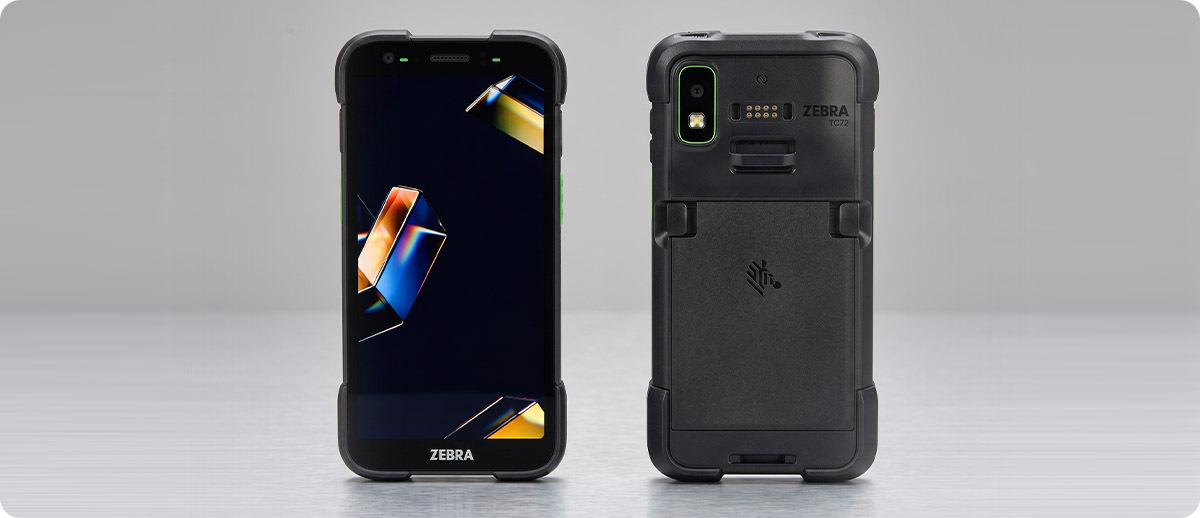
Zebra TC701 Mobile Computer
Part #: TC7010-041B2C00A1-NA | LAN, Wi-Fi 7 | 12GB/256GB | SR560 Imager + ToF Sensor | 50MP RFC | Standard Battery
Zebra's most powerful TC7 series device — Dragonwing Q-6690 with dedicated AI engine, integrated UHF RFID, 6" AMOLED 1500-nit display, Wi-Fi 7, Bluetooth 6.0, 12ft drop rating, 3,500 tumbles, IP65/IP68, MIL-STD-810H, thermal shock tested. Available in Wi-Fi (LAN) and 5G (WAN) configurations.
View Zebra TC701 →The AI Camera Suite: Practical Applications, Not Just a Demo Feature
The TC701's camera system is 50MP on the rear with autofocus, optional 13MP ultra-wide angle, and an 8MP front camera. But the hardware is paired with Zebra's Enterprise AI Camera app, and this is where the "AI" label stops being a marketing checkbox and starts being an operational feature.
The AI Camera app does four things that matter in real workflows: it detects when the camera lens is dirty and prompts the worker to clean it before capturing an image; it detects blurry or low-quality images and automatically prompts a retake; it applies facial blur to protect bystander privacy in environments where documentation images may capture people; and it applies a timestamp watermark to each image for compliance and dispute resolution purposes.
For last-mile delivery operations where proof-of-delivery photos are a standard workflow requirement, these features directly address the most common failure modes: blurry delivery photos that don't prove anything, and privacy concerns about capturing doorbell camera areas or bystanders. For receiving operations where damaged goods need to be documented photographically, the dirty lens detection and retake prompt reduce the rate of unusable documentation images that require follow-up.
Beyond the Enterprise AI Camera, Zebra's Frontline AI Suite allows operations to develop custom on-device AI applications, computer vision for quality inspection, OCR for reading non-barcoded labels or documents, condition assessment, and others. Zebra is positioning the development timeline at days rather than months for targeted AI apps using the suite. Whether that claim holds for your specific use case depends on the complexity of the application and your development resources but the hardware foundation for running those apps locally, without cloud latency or connectivity requirements, is genuinely there in the TC701.
Ruggedness: Zebra's Most Rugged TC7 — By a Meaningful Margin
The TC701 survives 12-foot drops to concrete. The TC73 and TC78 are rated to 10-foot drops. Two feet doesn't sound like much until you consider that drop energy scales with the square of velocity a 12-foot drop delivers roughly 20% more impact energy than a 10-foot drop. More practically: 12 feet covers the height of most warehouse mezzanines and elevated work platforms. A TC73 dropped from the top of a two-level picking platform would be outside its spec. The TC701 isn't.
Tumble rating: 3,500 tumbles at 1.64 feet 75% more than other TC7 devices. IP65 and IP68. MIL-STD-810H compliant. And the addition that's new to the TC701: thermal shock testing. This is a specific test protocol for devices that experience rapid, large temperature changes, a worker moving from a frozen food warehouse floor into a warm loading dock, or a postal carrier moving between a cold vehicle and outdoor conditions. Thermal shock can crack screens and warp chassis materials; the TC701 has been specifically tested and validated for this scenario.
For operations in controlled indoor environments at consistent temperatures, a standard climate-controlled warehouse or office, thermal shock testing is a spec you'll never need to call on. For operations with significant temperature variation throughout the workday, it's a meaningful durability validation that the TC73 and TC78 don't carry.
Wireless: Wi-Fi 7, Bluetooth 6, 5G Release 17
Wi-Fi 7 is the latest wireless standard, delivering higher throughput, lower latency, and better performance in high-device-density environments compared to the TC73/TC78's Wi-Fi 6E. In a facility with 50-100 devices all connected to enterprise Wi-Fi, Wi-Fi 7's multi-link operation (the ability to connect to multiple frequency bands simultaneously) reduces congestion and latency meaningfully. For facilities that have already upgraded their AP infrastructure to Wi-Fi 7, the TC701 makes full use of the capability. For facilities still running Wi-Fi 5 or Wi-Fi 6 infrastructure, the TC701 is backward compatible. you won't see the benefit of Wi-Fi 7 until the AP infrastructure catches up, but you'll have the device-side capability already in place.
Bluetooth 6.0 brings extended range and reduced power consumption compared to BT 5.2 on the TC73/TC78. For operations pairing the TC701 with ring scanners, wireless headsets, or other Bluetooth accessories, the extended range and better power profile extend the practical working distance and battery life of connected accessories.
The WAN (cellular) TC701 models support 5G Release 17, the current generation of 5G standard including private 5G networks. For operations evaluating private 5G as a warehouse networking alternative to Wi-Fi, the TC701 WAN is the right device-side specification. The LAN-only TC701 (including the AA-stocked TC7010-041B2C00A1-NA) is the right choice for operations running on enterprise Wi-Fi without cellular requirements.
Battery and Power: Built for the Longest Shifts
The TC701 ships with either a 5,000mAh standard battery or a 7,240mAh extended battery, the most powerful batteries in the TC7 series. Both are PowerPrecision+ with BLE battery intelligence reporting state of health and charge level to your MDM. Both support hot swap, no power-down required to change the battery, no data loss, no session interruption. For multi-shift operations where devices run 16-24 hours per day, hot swap with a charged spare battery at shift change is the right operational model.
The fast charge capability is a genuine operational benefit: 0 to 70% charge in 45 minutes. A worker who starts a shift with a partially depleted battery can put the TC701 in a charging cradle during a break and return to a device that's substantively recharged in under an hour. For operations that don't manage individual device batteries rigorously, fast charge provides a recovery path that earlier TC7 devices didn't offer at the same rate.
The TC501 and TC701 share the same standard battery (BTRY-TC5A7A-SC-01 on the AA site), a useful detail for operations that have already deployed TC501 hardware and want to standardize their battery inventory and charging infrastructure across both platforms.
Zebra TC501 / TC701 Standard Battery
Part #: BTRY-TC5A7A-SC-01 | Compatible with both TC501 and TC701
OEM Zebra rechargeable standard capacity battery — engineered for TC501 and TC701 devices. PowerPrecision+ with BLE battery intelligence. Enables hot swap operation for uninterrupted shift coverage.
View TC701 Battery →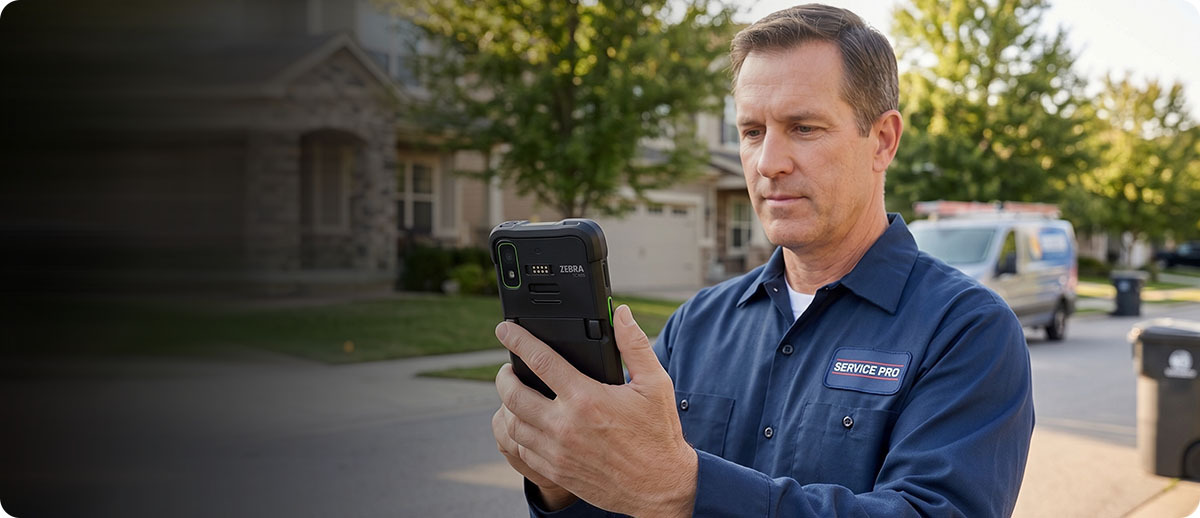
Where the TC701 Actually Shines by Vertical
Warehouse and Distribution: The combination of AC670 extended range scanning (up to 100ft), integrated UHF RFID, and Dragonwing processing makes the TC701 the first TC7 device that can genuinely replace a dedicated RFID reader and an extended range scanner simultaneously. For operations doing high-bay pick verification, cycle counts on RFID-tagged inventory, and receiving, all with one device, the TC701 is a serious consolidation opportunity. The 3,500 tumble rating and 12-foot drop spec match the demands of a warehouse floor over a 4-5 year lifecycle.
Transportation and Logistics / Last-Mile Delivery: The TC701's WAN configuration with 5G, the AI camera with proof-of-delivery features, the thermal shock rating, and the 7,240mAh extended battery address the specific operational challenges of drivers and couriers: outdoor environmental exposure, long shifts without reliable charging access, the need for compliant proof-of-delivery documentation, and cellular connectivity in areas without facility Wi-Fi. The TC73/TC78 covers some of these needs and the TC701 covers all of them more completely.
Field Service: Remote expert communication benefits from the AI noise cancellation audio system. The ToF 3D sensor enables field dimensioning and spatial documentation without separate tools. The 50MP camera captures high-fidelity site documentation. And the Frontline AI Suite opens the possibility of on-device diagnostic and condition assessment applications that field service operations have traditionally required cloud connectivity or separate tablets to run.
Retail: For store associates doing price checks, inventory verification, and RFID-based stockroom management, the TC701 is more device than the workflow requires, a TC53 or TC73 handles retail floor tasks without the premium price. The TC701 earns its place in retail in high-shrink environments where RFID item-level tracking is active, or in backroom receiving and inventory management where its extended capabilities are more fully utilized.
TC701 vs. TC73/TC78: The Upgrade Decision
| Specification | TC73 / TC78 | TC701 |
|---|---|---|
| Processor | Qualcomm 6490 | Dragonwing Q-6690 + dedicated AI engine |
| RAM / Storage | Up to 8GB / 128GB | Up to 12GB / 256GB + 2TB MicroSD |
| Display | 6" FHD+ LCD | 6" AMOLED 1500 nits, Gorilla Glass Victus |
| Wireless | Wi-Fi 6E, BT 5.2 | Wi-Fi 7, BT 6.0, 5G Release 17 (WAN) |
| Integrated RFID | ✗ Optional sled only | ✓ Standard on all models (200 tags/sec) |
| Drop rating | 10 ft to concrete | 12 ft to concrete |
| Tumble rating | ~2,000 at 1.64 ft | 3,500 at 1.64 ft (75% more) |
| Thermal shock | ✗ Not tested | ✓ Tested and validated |
| Battery (standard) | 4,300 mAh | 5,000 mAh (standard) / 7,240 mAh (extended) |
| Camera | 13MP rear | 50MP rear + optional ultrawide + ToF 3D sensor |
| AI capabilities | ✗ No dedicated AI engine | ✓ Dedicated NPU, Frontline AI Suite |
The Honest Verdict: Who Should Buy the TC701
The TC701 is the right device for operations that can actually use what it offers. That's a shorter list than the spec sheet makes it seem.
Buy the TC701 if: You're running or planning to run RFID-based inventory management and want to avoid the cost and complexity of a separate RFID sled. Your workers operate in environments with significant temperature variation that would benefit from thermal shock validation. You're evaluating AI-powered workflows, computer vision, on-device analytics, proof-of-delivery automation, and need the processing platform to support them. Your scanning requirements include high-bay racking at 60+ feet and you're speccing the AC670 engine. Your operation runs long shifts or multi-shift deployments where the extended battery and fast charging matter.
Stick with the TC73/TC78 if: Your workflows are standard WMS-connected pick, verify, and move operations that don't require RFID, AI applications, or extended scanning range. Your facility is climate-controlled with consistent temperatures. Your workers operate primarily indoors on enterprise Wi-Fi and don't need 5G. The TC73/TC78's 10-foot drop rating is sufficient for your environment. In this scenario, the TC701's premium price buys you capabilities your operation isn't going to use, and the TC73/TC78 at a lower per-unit cost deployed across more workers is a better operational investment.
The TC701 is a genuinely impressive device, it's not a marketing refresh. But the question worth asking before the purchase decision is: which of the TC701's specific advantages does your operation need, and at what point in the next 4-5 years will you actually use them? That answer determines whether the premium is justified or whether the TC73/TC78 is the smarter deployment decision for your specific operation right now.

Frequently Asked Questions: Zebra TC701
Is the TC701 backward compatible with TC73/TC78 accessories?
Not fully. The TC701 is a new form factor with a different physical footprint than the TC73/TC78, holsters, cradles, and mounts from the TC73/TC78 generation are not directly compatible without verification. If you're upgrading from a TC73/TC78 fleet, accessory compatibility is a line item in the migration cost estimate. Zebra offers a TC701 accessory guide covering compatible cradles, holsters, and mounting options for the TC701's specific dimensions. Contact our team for a migration accessory assessment before committing to a deployment plan.
Can the TC701's RFID reader handle long-range pallet or rack scanning?
The TC701's integrated RFID is short-range UHF, designed for close-proximity inventory counting (shelf sweeps, pallet reads) at distances of a few feet rather than portal or dock-door range detection. For applications requiring long-range RFID reads, scanning entire pallets as they move through dock doors, or reading tags on high racking from the floor, a dedicated fixed RFID reader or a longer-range handheld RFID solution is more appropriate. The TC701's integrated RFID is a meaningful convenience for close-range inventory workflows; it's not a replacement for fixed infrastructure RFID systems.
How does the Zebra Frontline AI Suite work in practice?
Zebra's Frontline AI Suite is a development framework that provides pre-built AI models and APIs for common frontline applications, image classification, OCR, object detection, barcode reading enhancement, that developers can customize and integrate into enterprise apps. The "days instead of months" development claim applies to applications built on these pre-built models rather than trained from scratch. Custom AI applications requiring unique training data and model development take longer. The suite reduces the technical barrier to deploying AI features in enterprise apps, particularly for ISVs and enterprise development teams that aren't AI specialists.
What Android version does the TC701 ship with, and what's the support lifecycle?
The TC701 ships with a current Android version with Zebra's LifeGuard for Android security update program included with any active OneCare service contract. Zebra's Mobility DNA platform provides committed Android version support extending well beyond Google's standard Android lifecycle, a key consideration for enterprise deployments with 4-5 year device refresh cycles. The exact supported Android version roadmap is available from Zebra's LifeGuard documentation, and our team can walk through the lifecycle implications for your planned deployment timeline.
Does the TC701 work with our existing Zebra MDM and device management tools?
Yes. The TC701 runs Zebra's full Mobility DNA suite, StageNow for device staging, VisibilityIQ and Device Tracker for fleet visibility, PowerPrecision Console for battery management, and integrates with standard EMM platforms including VMware Workspace ONE, Microsoft Intune, and SOTI MobiControl. If you're managing an existing Zebra device fleet with any of these tools, the TC701 enrolls and manages through the same infrastructure. The Dragonwing processor and expanded memory make Zebra DNA services more responsive on the TC701 than on previous-generation devices.
The TC701 is one of the more interesting device decisions to come across our desk in the last few years, genuinely new capabilities, not just a spec refresh. If you want to talk through whether the TC701 or TC73/TC78 is the right fit for your specific deployment, fleet size, application requirements, accessory transition, our team knows these platforms well. Fill out the form below and let's work through the right configuration for your operation.