
Zebra TC501 Review: Is this Ai-Powered Mobile Computer Worth the Investment?
Posted by Advanced Automation on Jan 13th 2026

If you're shopping for enterprise mobile computers in 2025, you've probably noticed something: every manufacturer is throwing around "AI-ready" and "next-generation" like they're going out of style. But when Zebra released the TC501, they actually backed up the hype with hardware that can handle real artificial intelligence workloads right on the device.
After spending time researching this device and comparing it against what's currently available, the TC501 isn't just another incremental upgrade. It's a legitimate shift in what handheld computers can do for frontline workers. But that doesn't mean it's the right choice for everyone.
Let us walk you through what actually matters about this device, who should buy it, and whether the premium price makes sense for your operation.
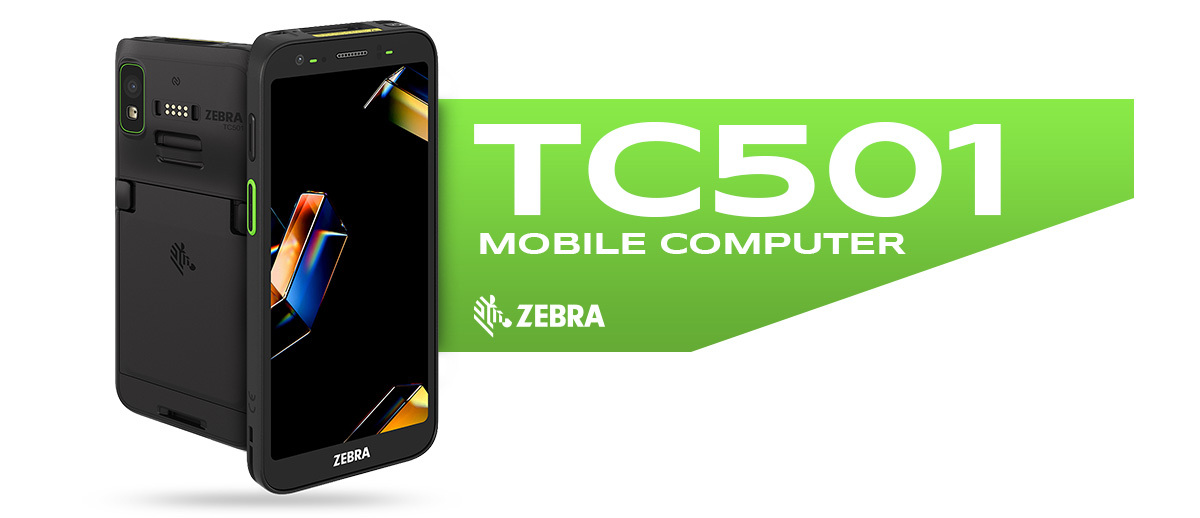
What Makes the Zebra TC501 Handheld Different
The TC501 runs on Qualcomm's Dragonwing Q-6690 processor, which sounds technical but here's what it means in practice: this chip was built specifically to run AI applications locally. Not "AI-ready" in the marketing sense—it has a dedicated neural processing unit that can actually execute machine learning models without sending data to the cloud.
Why does that matter? Because running AI on-device means your workers can use computer vision apps to verify products, check quality, or confirm deliveries even when they're in a concrete warehouse with spotty WiFi. No lag, no "processing" spinner, no connectivity requirements.
The device comes with up to 12GB of RAM and 256GB of storage. For context, most enterprise handhelds top out at 4-6GB RAM. The extra memory isn't just a spec sheet flex—it's the difference between running one app smoothly and juggling multiple applications with camera feeds, RFID reads, and barcode scans all happening simultaneously.
The 6-inch AMOLED screen hits 1500 nits of brightness. If your workers ever scan barcodes outside or need to verify deliveries in direct sunlight, that brightness level is the difference between squinting at a washed-out screen and actually reading what's on it.
Here's the feature that might actually justify the price: every TC501 has built-in UHF RFID. Not as an add-on sled that costs another $600 and makes the device bulky. It's integrated into the body. If you're doing any inventory management, asset tracking, or authentication work with RFID tags, this alone could save you serious money.
Real-World Applications Where the TC501 Actually Shines
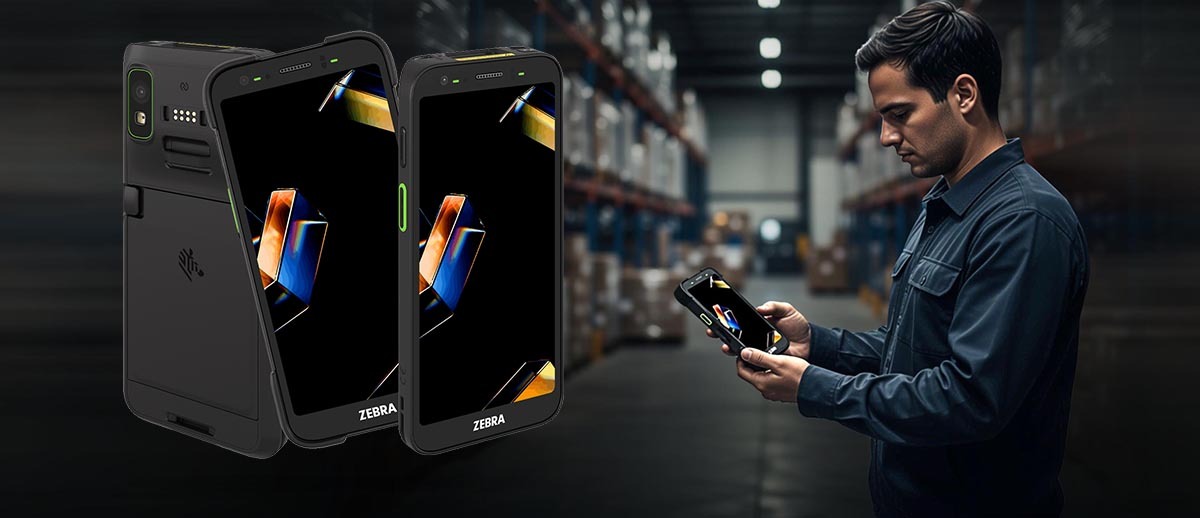
- Warehouse Operations: Imagine a warehouse worker doing cycle counts. With the TC501, they can scan pallets with the long-range barcode scanner from 100 feet away—no ladder needed. When they get closer, the integrated RFID reads all the tags on a pallet in one pass. The AI camera app automatically detects if a label is damaged or wrong. One device, one worker, way more productivity than the multi-tool approach most operations use today.
- Last-Mile Delivery: Delivery drivers deal with constant environment changes—cold warehouses at 4 AM, hot trucks by noon, customer doorsteps in the rain. The TC501's thermal shock testing and IP68 rating mean it actually works through those conditions. The AI-powered camera captures proof of delivery photos that are automatically checked for quality (no more blurry photos that cause disputes). The 5G connectivity uploads those images instantly from anywhere, and the hot-swappable battery means drivers never lose time to a dead device.
- Retail Store Operations: Floor associates using the TC501 can scan items for price checks with the standard imager, check inventory levels, and locate products in the backroom using RFID—all without switching devices or adding accessories. The WiFi 7 connectivity means instant communication even during Black Friday when the store's packed with customers all using their phones. Store managers can use the same device to walk the floor doing planogram compliance checks, with the AI verifying shelf layouts against photos.
- Field Service Technicians: Techs working on equipment in remote locations benefit from the device's 11-year lifecycle and ruggedized design. They're not in offices—they're on rooftops, in basements, crawling under equipment. The 8-foot drop spec handles real-world accidents. The ability to run diagnostic apps, capture high-resolution equipment photos with the 50MP camera, and access manuals offline makes them more effective. The AMOLED screen visibility means they can see wiring diagrams even in weird lighting conditions.
- Manufacturing Quality Control: Quality inspectors on production lines can use computer vision apps running locally to detect defects, verify assembly steps, and check part numbers automatically. The dedicated AI engine processes images in real-time without lag. No standing around waiting for cloud processing. No quality issues slipping through because manual inspection is slow. The device handles dusty, temperature-variable manufacturing environments that would kill a consumer tablet in a week.
- Healthcare Mobile Workflow: While Zebra has specific healthcare models, the TC501's capabilities translate well to clinical settings. Nurses can scan patient wristbands, verify medications with both barcode and RFID, capture wound photos for medical records, and access patient charts—all with a device that can be wiped down with harsh disinfectants. The battery hot-swap means 24/7 operation across shifts without device downtime.
How It Compares to What You're Probably Looking At
The honest truth? The Honeywell CT47 is the TC501's main competitor, and it's a solid device. The CT47 has similar processing power, great ruggedness, and proven reliability. But it doesn't have integrated RFID—you need to buy a separate sled if you want that capability. It also tops out at 8GB RAM, uses WiFi 6E instead of WiFi 7, and doesn't have the dedicated AI processing unit.
If your operation needs RFID, the TC501 pays for itself immediately by eliminating that sled cost. If you're planning any AI applications in the next 3-5 years, the TC501 is the only device in this class that can actually handle them properly.
The Zebra TC73/TC78 models are more rugged—they handle 10-foot drops versus the TC501's 8 feet. If you're working in extremely harsh environments like mining, heavy construction, or severe outdoor conditions, the TC73/TC78 might be the safer bet. But they don't have the AI capabilities, AMOLED display, or integrated RFID of the TC501.
Budget options like the Datalogic Memor Mobile Computer or entry-level Zebra models work fine for basic barcode scanning and simple data entry. But they're going to feel outdated in 2-3 years. The TC501 is designed to still be capable in 2030 and beyond.

The Durability Question Everyone Asks
Drop testing specs are one thing. Real-world durability is another. The TC501 is rated for 8-foot drops to concrete, 9 feet with the optional rugged boot. That's legitimately good—not "ultra-rugged industrial" but definitely enterprise-grade. It'll handle being dropped from shoulder height, bouncing around in a delivery truck, or getting knocked off a warehouse shelf.
The IP65 and IP68 sealing means it's completely dust-proof and can handle water immersion. Your workers can use it in the rain, hose it down for cleaning, or work in dusty warehouses without killing the device.
What impresses me more is the thermal shock testing. Most devices get tested in one temperature range. The TC501 was tested for rapid temperature transitions—like a delivery driver going from a -10°F freezer truck into a 95°F loading dock. Those temperature swings destroy most electronics over time. Zebra actually engineered for that scenario.
The Gorilla Glass screen holds up to keys, box cutters, and other sharp objects that somehow always end up near expensive electronics. After seeing too many cracked screens on consumer tablets being used in warehouses, proper screen protection matters.
Battery Life Reality Check
The hot-swappable battery design is smarter than it sounds. In most operations, device downtime for charging is hidden lost productivity. A worker swaps in a fresh battery in 10 seconds and keeps working. No waiting for charge cycles, no dead device sitting on a charger while work piles up.
The fast charging hits 70% in 45 minutes, which means a quick lunch break can top up a battery. The extended battery option handles longer shifts or multi-shift operations where a single battery wouldn't cut it.
The AMOLED display actually helps battery life because black pixels are truly off, not just dark. If your apps use dark mode interfaces, you get noticeable battery improvements over LCD screens that backlight everything.
The Lifecycle Economics That Actually Matter
Zebra designed the TC501 for a lifecycle extending to 2036. That's 11 years from launch. Most companies replace mobile computers every 3-5 years, so an 11-year device might seem like overkill.
But here's where it gets interesting: what if you actually kept devices for 8-10 years? The extended lifecycle fundamentally changes the economics. That same device replaced every 3 years multiplies your hardware acquisition costs significantly over a decade.
The extended lifecycle isn't just about hardware lasting. It's about the platform remaining capable. The TC501's processing power, memory, and AI capabilities mean it can run applications developed in 2030 that we haven't even thought of yet. Compare that to devices being deployed today that already feel slow.
The sustainability angle matters more to some companies than others. The TC501 uses 30%+ recycled plastic and is designed for long service life, which aligns with ESG goals. If your company tracks carbon footprint, fewer device replacements means lower environmental impact.
Is This the Right Investment for Your Operation?
If you're running a straightforward operation that needs basic barcode scanning and data entry, honestly? No. You're paying for capabilities you won't use. Look at more economical options and allocate the budget elsewhere.
But if any of these describe your operation, the TC501 makes financial sense:
You're already using or planning to use RFID. The integrated reader pays for itself immediately.
You want to deploy AI applications for quality control, product recognition, or automated verification in the next few years. This is the only device in its class that can actually run those applications properly.
You need devices that'll stay current for 7-10 years. The future-proof connectivity and processing power mean this device won't be obsolete in 2028.
Your workers operate in challenging conditions—temperature extremes, wet environments, inevitable drops. The ruggedness and battery flexibility minimize downtime.
Productivity improvements matter to your bottom line. If this device saves each worker 15-20 minutes per shift through better tools, faster processing, and less device-switching, the labor savings can quickly justify the investment.
Questions to Ask Before You Buy
Are we planning AI-powered applications? Be honest. If the answer is "maybe someday" that's probably not enough to justify the premium. If the answer is "we have specific use cases identified" then this is your device.
- Do we actually need RFID? If yes, the TC501 is a no-brainer versus buying separate RFID hardware. If no, you're paying for a feature you'll never use.
- What's our real device replacement cycle? If you typically replace devices every 2-3 years to stay current, the lifecycle value proposition disappears. If you keep devices until they truly die, this is perfect.
- How harsh is our environment really? Be honest about drop frequency and environmental conditions. The TC501 handles most enterprise environments. If you're in extreme industrial settings, the TC73/TC78 might be worth sacrificing some features for extra protection.
- Do we have the IT support to manage these? Advanced devices need corresponding IT capabilities. Make sure you have the resources for fleet management, app deployment, and user support—or budget for Zebra's managed services.
The Zebra TC501 represents a legitimate generational shift in mobile computing capability. The combination of AI processing, integrated RFID, connectivity future-proofing, and extended lifecycle creates a device that's genuinely more capable than what came before.
It represents a premium investment. But premium compared to what? If you calculate total cost over the device's actual lifespan, account for labor productivity improvements, and factor in the capabilities you're getting that would require multiple devices or add-ons with alternatives, the economics start looking quite different.
The right buyers for this device are operations that have real AI use cases, need RFID capability, value long lifecycle planning, and operate in conditions where ruggedness and reliability directly impact productivity. For those buyers, the TC501 isn't just a good investment—it's probably the only real option that checks all the boxes.
If you're running a more straightforward operation without those requirements, spend less money on a simpler device and save the difference. Not every operation needs an AI-powered, RFID-integrated, WiFi 7 handheld. But for those that do, the TC501 delivers.