
Zebra MC3400 Computer: Powering Modern Enterprise Mobility
Posted by Advanced Automation on Jan 8th 2025
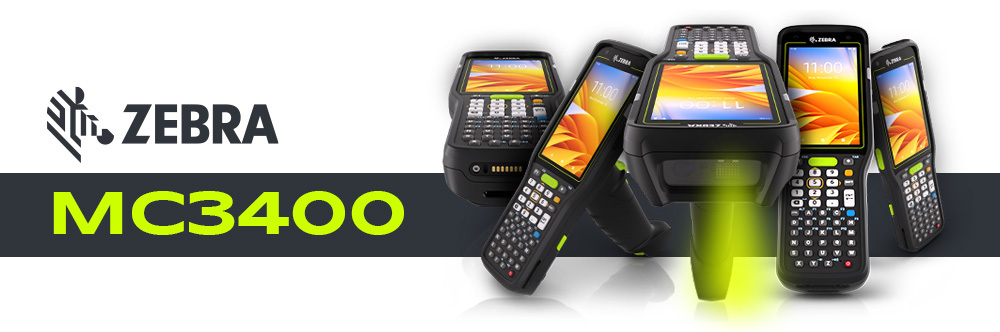
The Next Evolution in Rugged Mobile Computing
Modern supply chains, warehouse operations, manufacturing facilities, and retail environments face unprecedented pressure. The rise of e-commerce, coupled with demands for faster fulfillment and real-time operational visibility, necessitates tools that enhance workforce productivity and efficiency. Rugged mobile computers are central to meeting these challenges, providing frontline workers with the data capture and communication capabilities needed to perform tasks accurately and swiftly.
Building upon the legacy of the highly successful MC3000 family, Zebra Technologies introduces the MC3400 series, comprising the Zebra MC3400 and Zebra MC3450 models. This latest generation represents a significant advancement in key-based, versatile Zebra Mobile Computer equipment, engineered specifically for the rigorous demands of contemporary workflows. The continued development and significant upgrade of this key-based line signal a recognition that, despite the prevalence of all-touch interfaces, physical keys remain indispensable for speed and accuracy in many high-volume scanning and data-entry tasks, particularly in environments where gloves are common or tactile feedback is paramount.
Unpacking the Zebra MC3400 Series: Core Capabilities
The MC3400 and MC3450 share a robust foundation designed for demanding enterprise use.
Ergonomic Form Factors: The series offers two distinct designs to match workflow requirements: a Gun grip model optimized for comfort and security during scan-intensive shifts, and a Straight Shooter (brick) model providing lightweight comfort for tasks involving a mix of scanning and manual data entry. Both forms incorporate ergonomic considerations like finger perches and balanced weight distribution for all-day use.
Expanded Memory and Storage: To complement the powerful processor, the series offers flexible memory configurations: Standard (4 GB RAM/64 GB Flash), Expanded (6 GB RAM/64 GB Flash), and Full (6 GB RAM/128 GB Flash). This represents up to 50% more RAM and four times the Flash storage compared to the standard MC3300x, providing ample resources for complex applications and extensive data storage. A MicroSD slot allows for further expansion up to 2 TB.
Extended Battery Life: A high-capacity 7000mAh PowerPrecision+ rechargeable Li-Ion battery powers the devices, designed to last through long shifts. Crucially, the battery supports hot-swap functionality, allowing users to change batteries without powering down the device or losing their session, ensuring continuous operation. An optional BLE-enabled battery is available to support the Device Tracker feature.
Significant Performance Boost: At the heart of the MC3400 series is the Qualcomm® 4490 octa-core processor running at 2.4 GHz. This delivers nearly 2.5 times the processing power compared to the Snapdragon 660 found in the previous generation, ensuring superior application performance, smooth multitasking, and the capacity to run demanding, potentially AI or AR-driven, applications without performance bottlenecks.
Durable Display and Touch Panel: A 4-inch WVGA (800 x 480) color display provides clear visibility, protected by Corning® Gorilla® Glass on both the display and the imager window. The dual-mode capacitive touch panel supports input via finger, gloved finger, or an optional conductive stylus, ensuring usability in various conditions. Display brightness varies by configuration, with Standard models offering 350 NITS and Expanded/Full models providing a brighter 600 NITS for better visibility.
Future-Proof Operating System: The MC3400 series runs on the Android operating system and comes with Zebra's commitment to extended support. Standard configurations are upgradeable to Android 15, while Expanded and Full configurations offer support up to Android 18 (pending Qualcomm commitment). This extended lifecycle provides significant investment protection, ensuring access to future Android features and security updates well beyond typical consumer device support timelines.
Key MC3400/MC3500 Hardware Enhancements
Class-Leading Ruggedness: Zebra positions the MC3400/MC3450 as the most rugged devices in the MC3000 series history. They meet MIL-STD-810H specifications, boasting an impressive 8-foot (2.4m) drop-to-concrete rating at room temperature (6 ft across the operating temperature range) and surviving 4,000 1-meter tumbles. Furthermore, the devices feature dual IP65 and IP67 sealing, making them completely dust-tight and capable of withstanding water jets and full submersion in water. This level of sealing, particularly IP67, moves beyond merely surviving accidental spills; it enables reliable operation in environments with routine exposure to liquids (like wash-down areas in food processing) or heavy dust (manufacturing, outdoor yards), expanding deployment possibilities and enhancing reliability compared to devices with lower IP ratings like the IP64-rated MC3300x.
Improved Ergonomics and Data Input: The physical keypads (available in 29-key Numeric, 38-key Function Numeric, and 47-key Alpha Numeric options) have been redesigned. They are 12% larger, featuring bigger keys with more space between them, facilitating faster and more accurate data entry, a crucial benefit for users wearing gloves.
Next-Generation Wireless: Both models come standard with Wi-Fi 6E (IEEE 802.11ax), supporting the 2.4 GHz, 5 GHz, and the newer, less congested 6 GHz bands with 2x2 MU-MIMO. Compared to the Wi-Fi 5 found in the predecessor, Wi-Fi 6E offers significantly higher speeds, lower latency, increased capacity, and improved performance, especially in dense device environments common in warehouses and manufacturing plants. The inclusion of Wi-Fi 6E ensures the device can leverage the benefits of modern enterprise network infrastructure as it is deployed, preventing the device itself from becoming a network bottleneck during its operational lifespan. Advanced Bluetooth v5.3 provides more reliable and secure connections for peripherals like headsets and printers.
Integrated High-Resolution Cameras: Addressing modern documentation and collaboration needs, the MC3400 series offers optional front and rear cameras on select configurations, now available on both the gun and straight shooter form factors. This includes a 5 MP front-facing camera, enabling video calls and biometric facial recognition, and a 13 MP rear-facing autofocus camera with an LED flash capable of capturing high-resolution images and videos.
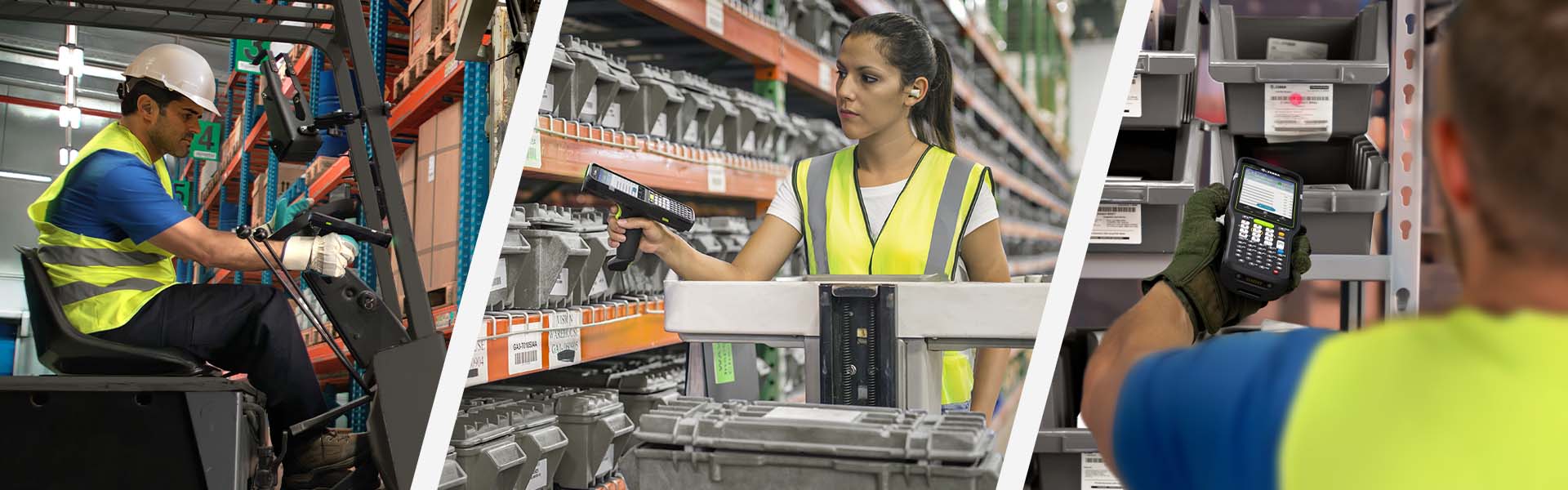
Versatile Scanning Capabilities: A choice of four advanced 1D/2D scan engines caters to diverse needs:
Zebra MC3400/MC3500 Scan Engines
SE4710: Standard range scanning.
SE4770: Standard range, optimized for indoor/outdoor use, captures photos/documents.
SE55 Advanced Range: Features IntelliFocus™ technology for capturing barcodes from in-hand distances to over 40 feet (12.2m) away.
SE58 Extended Range: Also with IntelliFocus™, this engine pushes the boundaries for handheld scanning, capturing barcodes from less than 2 inches (5cm) to over 100 feet (30.5m) away, ideal for high racks or yard/port environments. The SE55 and SE58 engines utilize a highly visible green laser aimer, which is up to 7 times more visible than traditional red aimers, making it easier to target barcodes accurately across various distances and lighting conditions. All engines promise split-second capture, even on damaged or poorly printed barcodes.
MC3400 vs. MC3450: Choosing the Right Connectivity
While sharing the same core platform, processing power, ruggedness, and scanning capabilities, the fundamental difference between the Zebra MC3400 and MC3450 lies in their wireless connectivity options beyond the local network.
The Zebra MC3450 is the variant equipped with Wide Area Network (WWAN) capabilities, specifically offering 5G cellular data connectivity (with fallback to 4G/3G networks). It achieves this through support for one physical nano SIM and one eSIM, allowing flexibility in network choices or even dual-network support. Additionally, the MC3450 incorporates GPS (supporting GPS, GLONASS, Galileo, QZSS) for location-based applications and a magnetometer (eCompass) for direction and orientation sensing.
The Zebra MC3400, in contrast, is a WLAN-only device, relying solely on Wi-Fi (specifically the advanced Wi-Fi 6E) and Bluetooth for its wireless connections. It lacks the cellular radio, SIM slots, GPS, and magnetometer found in the MC3450.
This distinction directly dictates the optimal use cases for each model:
Zebra MC3400: Best suited for operations confined within the four walls of a facility where reliable Wi-Fi coverage is pervasive. Typical environments include warehouse interiors, distribution centers, manufacturing shop floors, and retail store backrooms or sales floors.
Zebra MC3450: Designed for applications that extend beyond the reach of the local Wi-Fi network or require precise location tracking. This makes it ideal for large outdoor areas like shipping yards, ports, and intermodal facilities; expansive campuses with incomplete Wi-Fi coverage; and potentially field-based tasks where cellular data is necessary for real-time communication and data access.
A key capability enabled by the MC3450 is its support for Private 5G networks. For organizations deploying their own private cellular networks, the MC3450 offers a compatible endpoint. Private 5G can provide advantages over Wi-Fi in certain large-scale, challenging environments, potentially offering greater coverage consistency, lower latency, enhanced security (as the network is privately controlled), and more seamless roaming for mobile assets like forklifts or workers moving across vast areas.
Offering these two distinct models based primarily on WAN/GPS capabilities allows Zebra to address different operational requirements effectively while maintaining consistency across the core platform. This approach leverages shared hardware, accessories (like chargers and batteries ), operating system builds, and Zebra DNA software tools. It enables businesses needing both indoor-only and indoor/outdoor connectivity to standardize on a familiar platform, simplifying device management, training, and support. Furthermore, it allows the MC3400 to be positioned potentially more competitively for the significant market segment that operates exclusively within reliable Wi-Fi coverage.
Generational Advancements: Why Upgrade from the MC3300?
The Zebra MC3400 Mobile Computer Series represents a substantial leap forward compared to its direct predecessor, the MC3300x (and an even greater leap from the original MC3300). Organizations currently using older MC3000 family devices should consider the compelling advantages offered by this new generation:
Quantum Leap in Performance: The move from the MC3300x's Snapdragon 660 (2.2 GHz) to the MC3400's Qualcomm 4490 (2.4 GHz) results in approximately 2.5 times more processing power. Coupled with up to 50% more RAM and four times the Flash storage, this translates directly into tangible productivity gains. Applications launch faster, multitasking is smoother, and the frustrating 5-10 second delays per scan point sometimes experienced on older devices during peak periods with multiple apps running can be eliminated. This can save workers up to 45 minutes per day, enabling more tasks (like picks or put-aways) per shift without increasing staffing. This enhanced power also prepares the device for next-generation applications leveraging AI or AR.
Superior Durability and Reliability: The MC3400 series raises the bar for ruggedness. The drop specification increases from 6 feet (MC3300x) to 8 feet (MC3400), the tumble specification improves from 3,000 to 4,000 1-meter tumbles, and the sealing advances from IP64 (dust and splash resistant) to dual IP65/IP67 (dust-tight, water jet resistant, and submersible). This enhanced resilience translates directly to increased device uptime, fewer repair incidents, suitability for harsher operating conditions (including outdoor or wet environments), and ultimately, a lower total cost of ownership.
Significantly Extended Device Lifecycle: Perhaps one of the most critical long-term advantages is the extended Android OS support. While the MC3300x is upgradeable to Android 14, the MC3400 series offers support up to Android 15 (Standard) or potentially Android 18 (Expanded/Full configurations). This much longer support window ensures access to the latest Android features and security patches for years longer, maximizing the return on investment and delaying costly hardware refreshes. Note that support for the original MC3300 (non-x) ends even sooner.
Next-Generation Connectivity: The upgrade from Wi-Fi 5 (802.11ac) in the MC3300x to standard Wi-Fi 6E in the MC3400 provides higher throughput, lower latency, and significantly better performance in crowded RF environments. The MC3450 variant adds optional 5G cellular data, a capability entirely absent in the MC3300 series, opening doors for seamless indoor/outdoor operations and private network integration. Bluetooth is also updated from v5.0 to v5.3.
Enhanced Data Capture Capabilities: The introduction of the optional SE58 scan engine with its 100-foot maximum range significantly extends data capture possibilities compared to the MC3300x's top-tier SE4850 engine (70-foot max range). This extended reach not only boosts productivity in high-bay warehouses but also enhances worker safety by reducing the need to climb ladders or use lifts for scanning high labels. The green laser aimer on the SE55/SE58 engines offers superior visibility compared to the MC3300x's red laser, improving targeting accuracy, especially over long distances or in bright light. Furthermore, the MC3400 series offers an optional front-facing camera (unavailable on MC3300x) and makes the optional 13MP rear camera available on both gun and straight shooter form factors (previously limited on gun models).
Refined Ergonomics: The redesigned keypad with larger, better-spaced keys improves data entry speed and accuracy, particularly for users wearing gloves.
Investment Protection: Importantly, Zebra ensured backward compatibility for the MC3400 series with existing MC3300 chargers and potentially batteries, significantly easing the upgrade path and reducing the initial investment required for charging infrastructure.
The cumulative impact of these advancements positions the MC3400 series not merely as an incremental update but as a platform fundamentally more capable of handling the demands of modern, data-intensive operations and supporting future workflow innovations that might strain older hardware.
| Feature | Zebra MC3400/MC3450 | Zebra MC3300x | Key Improvement/Impact |
|---|---|---|---|
| Processor | Qualcomm® 4490, octa-core, 2.4 GHz | Qualcomm Snapdragon™ 660, octa-core, 2.2 GHz | ~2.5x Faster Performance; Smoother Multitasking; Supports Advanced Apps |
| Max Memory/Storage | 6 GB RAM / 128 GB Flash | 4 GB RAM / 32 GB Flash | Increased Capacity for Complex Apps & Data Storage |
| Max Scan Range | SE58 Engine: > 100 ft (30.5m) | SE4850 Engine: 70 ft (21.3m) | Increased Productivity & Worker Safety in High-Bay Environments |
| Drop Specification | 8 ft (2.4m) to concrete (MIL-STD-810H) | 6 ft (1.8m) to concrete (MIL-STD-810G) | Enhanced Durability, Reduced Downtime & Repair Costs |
| Sealing | Dual IP65 / IP67 | IP64 | Dust-proof & Waterproof (Submersible); Reliable in Harsher Conditions |
| WLAN Standard | Wi-Fi 6E (802.11ax) | Wi-Fi 5 (802.11ac) | Higher Speed, Capacity & Performance in Dense Environments |
| WWAN Option | Yes, 5G Data (MC3450 only) | No | Enables Outdoor/Field Connectivity & Private 5G Use Cases |
| Max Android OS | Android 15 (Std) / Android 18 (Exp/Full) | Android 14 | Significantly Longer Lifecycle, Better ROI & Future-Proofing |
| Front Camera | Optional 5 MP | None | Enables Biometric Login, Video Collaboration |
| Rear Camera Support | Optional 13 MP (Both Gun & Straight Shooter) | Optional 13 MP (Straight Shooter/Turret only) | Increased Flexibility for Documentation Needs |
Competitive Landscape: How the MC3400 Series Measures Up
The Zebra MC3400 series enters a competitive market for rugged, key-based Android mobile computers. Its primary rivals include established players like Honeywell, particularly with its CK65 model, and Datalogic, with offerings such as the Skorpio X5.
Zebra MC3400 Series vs. Honeywell CK62/CK67
Performance: The MC3400's Qualcomm 4490 (2.4 GHz) processor significantly outperforms the CK65's older Snapdragon 660 (2.2 GHz) platform. Combined with higher maximum RAM/Flash options (up to 6GB/128GB vs. 4GB/32GB), the MC3400 holds a distinct advantage for demanding applications and multitasking.
Connectivity: The MC3400 series leads with standard Wi-Fi 6E and optional 5G (MC3450). The CK65 typically features Wi-Fi 5 (802.11ac) and Bluetooth 5.0, though cellular models exist. The MC3400's adoption of the latest standards provides better future-proofing.
Ruggedness: Both devices are exceptionally rugged. Honeywell claims a higher 10ft drop spec for the CK65, while the MC3400 boasts an 8ft drop and adds IP67 submersion protection alongside IP65. The CK65 offers specific models certified for cold storage and hazardous locations, a niche the standard MC3400 doesn't explicitly target.
Battery: Both offer high-capacity 7000mAh battery options.
Operating System: Zebra guarantees a longer OS support path for the MC3400 (up to Android 18 on some models) compared to the CK65's stated support through Android R (11) with potential upgrades to Android 14 via Honeywell's Mobility Edge platform. This longer lifecycle is a key differentiator for long-term investment protection.
Scanning: Both offer a range of scan engines, including extended range options. The MC3400's SE58 reaches up to 100ft, while the CK65's FlexRange XLR claims up to 80ft. The MC3400's use of a green aimer may offer better visibility in some conditions.
Software Ecosystem: Both Zebra (Mobility DNA) and Honeywell (Mobility Edge) offer comprehensive suites of enterprise management and productivity tools. Feature sets differ, with Zebra promoting unique tools like Identity Guardian facial recognition.
Zebra MC3400 Series vs. Datalogic Skorpio X5
Performance: Similar to the CK65 comparison, the MC3400's Qualcomm 4490 processor provides a significant performance advantage over the Skorpio X5's Snapdragon 660 platform. The MC3400 also offers higher maximum memory configurations.
Connectivity: The MC3400 again leads with Wi-Fi 6E and optional 5G, compared to the Skorpio X5’s Wi-Fi 5 and Bluetooth 5.0.
Ruggedness: The MC3400 offers higher drop (8ft vs. 6ft) and sealing (IP65/IP67 vs. IP65) specifications than the Skorpio X5.
Battery: The MC3400’s standard 7000mAh battery offers higher capacity than the Skorpio X5’s maximum 6200mAh option.
Operating System: This is a major differentiator. The MC3400’s path to Android 15/18 offers vastly superior longevity compared to the Skorpio X5, which typically ships with Android 10 and may have limited upgrade potential.
Scanning: The MC3400’s SE58 engine provides a longer maximum scan range (100ft) than the Skorpio X5’s extra-long-range option (up to 65ft). The Skorpio X5 does offer a wireless charging option, which is not standard on the MC3400.
Overall, the Rugged Zebra Scanner capabilities and underlying platform of the MC3400 series appear technologically superior to these key competitors, primarily due to its adoption of a newer-generation processor, the latest wireless standards, and a significantly longer Android OS support commitment. These factors strongly position the MC3400 for organizations prioritizing performance, future-readiness, and maximizing the lifespan of their mobile computing investment.
However, the decision between these capable platforms often extends beyond raw specifications. The maturity, usability, and specific features of each vendor's software management suite (Zebra Mobility DNA, Honeywell Mobility Edge, Datalogic Mobility Suite) play a crucial role. An organization's existing vendor relationships, familiarity with management tools, and specific IT priorities regarding deployment, security, or device tracking can heavily influence the final choice, sometimes outweighing minor hardware differences.

Value-Add Software: The Zebra Mobility DNA Advantage
Beyond the hardware, Zebra differentiates its mobile computers through the Mobility DNA suite – a comprehensive collection of software applications, development tools, and management utilities designed to enhance device functionality, simplify management, improve security, and maximize the return on investment throughout the device lifecycle. Mobility DNA aims to transform standard Android devices into powerful enterprise-ready tools, reducing deployment time, complexity, and costs. These tools can be managed via the Zebra DNA Cloud portal or integrated with existing Enterprise Mobility Management (EMM) systems.
Key Mobility DNA Tools for the MC3400/MC3450
Identity Guardian: Leveraging the optional front-facing camera, this tool provides secure, personalized access to shared devices through biometric facial recognition. It streamlines login for shift-based workers and enhances accountability and security beyond traditional passwords.
LifeGuard™ for Android™: Zebra's cornerstone enterprise support program delivers predictable Android security patches and OS updates—potentially up to Android 18 on MC3400—well beyond Google's native support. It ensures long-term security and compliance for rugged deployments.
Other Valuable Tools: Includes All-Touch Terminal Emulation for modernizing green-screen apps, PowerPrecision for battery health management, and WorryFree WiFi for real-time diagnostics. Optional solutions like Workcloud Communication add PTT, PBX, and secure messaging; Workcloud Task Management enables real-time task flow.
Device Tracker: Solves the problem of misplaced devices using BLE-enabled batteries. Even if powered off or out of charge, lost devices can be located quickly—cutting down on replacement costs and downtime.
StageNow: Enables IT teams to quickly configure and deploy large fleets of Zebra Android devices using barcode scan or NFC tap. It drastically reduces provisioning time during rollouts.
Enterprise Home Screen: Locks down the device interface, giving admins control over which apps and settings are accessible. Helps enforce usage policy, boost worker focus, and reduce support incidents.
DataWedge: Simplifies data integration by routing scanned barcode (or mag stripe) data directly into applications without coding. Ideal for speeding up deployment across workflows.
These software tools demonstrate that the value proposition of the MC3400 series extends beyond its physical attributes. Tools that simplify deployment (StageNow), enhance security (LifeGuard, Identity Guardian), and reduce operational costs (Device Tracker, PowerPrecision) directly impact efficiency and TCO, addressing common pain points in managing large fleets of mobile devices.
Target Environments: Industries and Applications
The Zebra MC3400 and MC3450 are versatile platforms designed to excel in a variety of demanding industrial and commercial environments. Their specific features make them particularly well-suited for the following sectors and tasks:
Warehousing & Distribution Centers: A core market for the MC3400 series. It excels in high-volume order picking, put-away, packing, shipping/receiving verification, inventory control, cycle counting, and cross-docking. The ergonomic gun grip supports scan-heavy workflows, while SE55/SE58 long-range scanners reach upper racks with ease. With fast processing, Wi-Fi 6E reliability, rugged IP67 durability, and a hot-swappable battery, it keeps up during peak activity without downtime.
Transportation & Logistics (T&L): Ideal for yard operations, intermodal terminals, and ports—especially with the MC3450 variant. Applications include container and trailer tracking, shipment verification, and GPS-based location tracking in large outdoor zones. 5G cellular connectivity bridges indoor and outdoor environments, while the extended-range SE58 scanner reads distant barcodes. IP67-rated durability ensures performance in unpredictable weather, making the MC3450 a smart choice for platform standardization across indoor/outdoor logistics.
Manufacturing: On the factory floor, the MC3400 handles line-side replenishment, WIP tracking, inventory management, quality checks, and part traceability. Its rugged IP67 design resists dust, debris, and occasional liquid exposure. The tactile keypad works well with gloves, while Wi-Fi 6E ensures stable connectivity—even in RF-challenging environments filled with machinery.
Retail (Back of Store/Warehouse Ops): While not commonly used on the sales floor, the MC3400 shines in backroom inventory management, receiving, pricing tasks, in-store online order fulfillment, and returns processing. Standard-range scanners like the SE4710/SE4770 or mid-range SE55 are ideal. Ease of use, Wi-Fi reliability, and DNA tools like Device Tracker support productivity in fast-paced retail environments.
The platform's versatility stems significantly from its wide range of configuration options. Businesses can tailor the device by choosing the appropriate form factor (gun or straight shooter), keypad layout (numeric, function numeric, alphanumeric), memory tier (Standard, Expanded, Full), and, crucially, the scan engine that best matches their specific workflow requirements. This configurability ensures that organizations can deploy a Zebra Handheld Computer optimized for each task, maximizing efficiency without overspending on unnecessary capabilities.
Investment Considerations: Key Takeaways for Decision-Makers
Investing in a new fleet of mobile computers is a significant decision. The Zebra MC3400 series presents a compelling value proposition built on performance, durability, connectivity, and longevity, but several factors warrant careful consideration.
Return on Investment (ROI) Drivers
Enhanced Productivity: With a ~2.5x boost in processing power, extended-range scanning, and optimized ergonomics like larger keys and a green aimer, the MC3400 helps workers complete tasks faster and with fewer errors. Even small gains—like eliminating scan delays—scale into major time savings across large teams.
Future-Proofing: Equipped with Wi-Fi 6E, optional 5G, and support for Android up to version 18, the MC3400 is ready for tomorrow’s enterprise tech. Its high-performance processor and generous memory ensure compatibility with future applications and software demands, extending ROI over time.
Reduced Total Cost of Ownership (TCO): Designed for long-term value, the MC3400 reduces lifetime costs with rugged hardware (8ft drop, IP67), an extended OS lifecycle, and backward compatibility with MC3300 accessories. Fewer repairs, longer usability, and tools like Device Tracker all reduce operational expenses. GO Zebra Trade-In rebates can further improve cost efficiency.
Improved Security and Manageability: Zebra’s Mobility DNA ecosystem streamlines deployment and management while strengthening security. LifeGuard™ delivers long-term patching, and Identity Guardian enables secure, biometric access—protecting sensitive enterprise data while easing IT workloads.
Key Considerations Before Purchase
Connectivity Requirements: If operations are confined to areas with reliable Wi-Fi, the MC3400 may be the best fit. For locations requiring cellular data or GPS for outdoor activities, the MC3450 is the better choice.
Scanning Needs: Evaluate typical scanning distances in your workflow to select the right scan engine. Options include SE4710, SE4770, SE55, and SE58, each designed for varying range and precision.
Application Demands: Consider the number of applications running concurrently. The MC3400 offers different memory configurations (Standard, Expanded, Full) to suit various workload complexities.
Software Value: Identify which Mobility DNA tools are most beneficial for your operation. For example, if biometric login or asset tracking through Device Tracker is essential, these tools can enhance operational efficiency.
Ecosystem Fit: If your organization already uses Zebra mobile solutions, the MC3400 provides seamless integration—familiar tools, accessory compatibility, and consistent user experience, streamlining adoption and reducing training costs.
A Future-Ready Investment in Workforce Mobility
The Zebra MC3400 and MC3450 mobile computers represent a significant evolution in rugged, key-based enterprise devices. They successfully blend a familiar, ergonomic form factor with substantial upgrades in processing power, memory, wireless connectivity (Wi-Fi 6E and optional 5G), data capture technology, and overall ruggedness. This combination makes the series a powerful tool for boosting workforce productivity and operational efficiency in demanding environments.
Compared to its predecessor, the MC3300 series, the MC3400 offers compelling advantages in nearly every critical area, justifying consideration for upgrade cycles. Against current key competitors, it stands out with its more powerful platform, adoption of the latest wireless standards, and notably longer Android OS support lifecycle, positioning it as a forward-looking choice. The value is further amplified by the comprehensive Zebra Mobility DNA software suite, which enhances security, simplifies management, and provides tools to address common operational challenges.
Ultimately, the Zebra MC3400 series is more than just a hardware refresh; it is a strategic investment for organizations operating in warehousing, manufacturing, transportation and logistics, and retail back-of-store environments. It provides the performance needed for today's demanding workflows while offering the future-proofing required to adapt to the increasingly connected, data-driven operational landscapes of tomorrow. For businesses seeking a versatile, high-performance, and durable mobile computing solution with a long operational lifespan, the Zebra MC3400 and MC3450 warrant serious consideration.