
Passive Vs. Active RFID: Which Technology is Best for Asset Tracking and Inventory Management?
Posted by Advanced Automation on Aug 17th 2025

Radio Frequency Identification (RFID) has become a cornerstone of inventory management, asset tracking, supply chain visibility, and warehouse management systems. Businesses across industries—from retail and healthcare to manufacturing and logistics—are adopting RFID technology to improve accuracy, cut costs, and gain real-time insights.
But one of the most common questions organizations face is whether to use passive RFID or active RFID. These two RFID tag technologies serve very different purposes, and the choice can significantly impact RFID implementation costs, performance, and return on investment (ROI).
This guide explains the differences between passive and active RFID, outlines their pros and cons, and helps you decide which solution fits your business best.
What is Passive RFID?
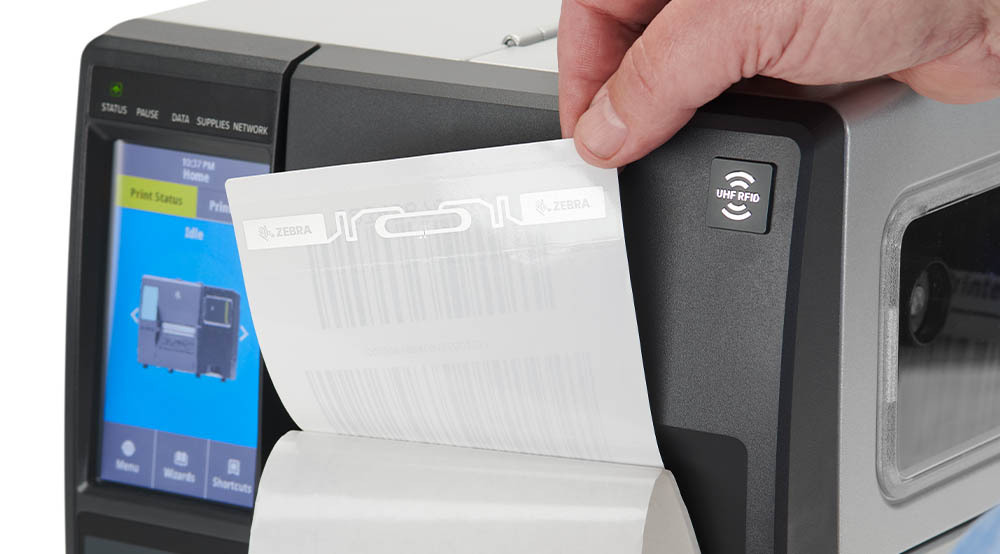
Passive RFID tags are the most common type of RFID label. Unlike battery-powered RFID tags, they contain no internal power source. Instead, an RFID reader transmits radio waves, which the tag’s RFID antenna captures and converts into energy. This powers the microchip, which then transmits the stored information back to the reader.
Passive tags are available in multiple frequency ranges. Low Frequency (LF RFID) operates at 125–134 KHz, suitable for access control or animal identification. High Frequency (HF RFID) at 13.56 MHz powers contactless payment cards, ticketing, and library systems. Ultra High Frequency (UHF RFID) between 860 and 960 MHz offers the longest range, making it the go-to choice for supply chain RFID and warehouse RFID solutions.
Because passive tags are inexpensive, durable, and maintenance-free, they’re ideal for high-volume applications like retail stock management, RFID in logistics, and warehouse inventory control.
What is Active RFID?
Active RFID systems work differently. These tags contain their own internal battery, allowing them to broadcast signals without relying on external energy. As a result, they offer far longer read ranges—often from 100 feet to several hundred feet—making them perfect for long-range RFID tracking.
Active RFID tags come in two main forms. Transponders activate only when queried by an RFID reader, while beacons broadcast data at set intervals regardless of reader presence. Many durable RFID tags in this category also include integrated sensors that track temperature, humidity, or shock—vital for industries like healthcare, cold chain logistics, and industrial manufacturing.
This ability to provide real-time tracking, also known as an RTLS (Real-Time Location System), sets active RFID apart. Hospitals use it to monitor medical equipment and patient movement. Cold chain providers rely on RFID sensor tags to ensure perishable goods remain within safe ranges. Manufacturers adopt active RFID for theft prevention, security systems, and high-value asset tracking.
Passive Vs. Active RFID: Comparing Strengths
The differences between passive and active RFID become clear when comparing performance, cost, and deployment requirements.
Passive RFID is affordable—tags cost between $0.10 and $2.00—and they require no ongoing maintenance. They last 10–20 years, are available in countless form factors, and can be embedded directly into packaging or labels. However, their RFID range is limited to about 30 feet, and they cannot provide continuous data or real-time monitoring. Performance may also be reduced when tags are placed near metal or liquids.
Active RFID, while more expensive, delivers powerful advantages. Tags often cost $25–$100+, and RFID readers for active systems are also more costly. Yet the payoff is clear: extended range, real-time RFID tracking, and integration with environmental sensors. Active systems are less prone to interference and can even support bidirectional communication with assets. The drawback is battery life, which typically lasts 2–7 years before replacement is required.
Choosing the Right RFID System
The choice between passive and active RFID depends on your business priorities. If your goal is low-cost, large-scale deployment—such as tagging every product in a retail store or every component in a factory—then passive RFID systems offer the most cost-effective and scalable option. Their maintenance-free operation, wide availability, and lower total cost of ownership make them ideal for industries where identification and counting are the main goals.
If your organization needs real-time location tracking, long-range RFID performance, or environmental monitoring, then active RFID systems are the better fit. The higher upfront investment and ongoing RFID cost of batteries are outweighed by the value of continuous monitoring, security, and data visibility. Active RFID is particularly well-suited to healthcare RFID solutions, warehouse security, logistics yards, and cold chain tracking.
Cost Considerations & ROI
When comparing RFID deployment costs, passive solutions require a smaller upfront investment. Readers range from $500–$2,000, and tags cost pennies on the dollar, which is why they dominate supply chain RFID adoption.
Active systems are more expensive, with readers often priced at $2,000–$10,000+ and tags costing up to $100 each. They also introduce ongoing operational costs for battery replacement. Yet in scenarios where asset visibility, theft prevention, or compliance is critical, the RFID return on investment of active systems often justifies the price.
Many companies choose a hybrid RFID solution, deploying passive tags for broad inventory tracking and active tags for high-value or mission-critical assets. This approach balances affordability with advanced functionality.
Hardware, Software, & Integration
Both RFID types rely on specialized hardware and software. Passive systems need readers powerful enough to energize tags and often require robust RFID antenna setups. Active systems focus more on signal reception but demand RFID software platforms capable of processing continuous data streams.
Increasingly, businesses adopt cloud-based RFID solutions that integrate both passive and active deployments. These platforms connect RFID data with ERP, WMS, or supply chain management systems, enabling smarter decision-making across the enterprise.

RFID Lifespan & Durability
Passive RFID tags can last decades, making them a “set it and forget it” solution for many industries. Active RFID tags, while limited by battery life, are available in rugged, industrial RFID designs with replaceable batteries that extend operational life. Both categories offer durable RFID tags capable of surviving extreme heat, cold, moisture, or mechanical stress, making them suitable for even the harshest environments.
Leading RFID Manufacturers
The RFID market includes a number of leading players. Zebra Technologies, Impinj, Honeywell and Alien Technology are well-known for RFID readers and hardware. On the tag side, Avery Dennison, Smartrac, Confidex, and NXP Semiconductors dominate RFID label and inlay production, while AeroScout (Stanley Healthcare) leads in active RFID tag solutions.
Top 5 Decision Factors
When choosing between passive and active RFID technology, consider these critical questions:
- What is your required read range? If you need to read tags from distances greater than 30 feet, active RFID is typically necessary.
- What is your budget for tags and total system cost? Passive RFID offers significant cost advantages for high-volume deployments, while active RFID may be cost-justified for high-value asset tracking.
- Do you need real-time tracking or just periodic identification? Active RFID enables continuous monitoring, while passive RFID is ideal for checkpoint-based tracking.
- What are your maintenance capabilities and preferences? Passive RFID requires no maintenance, while active RFID needs periodic battery replacement.
- What environmental conditions will the tags face? Both technologies offer rugged options, but active RFID generally provides superior performance in challenging RF environments.

Finding the Right RFID Solution
The decision between passive and active RFID comes down to balancing cost, performance, and operational goals. Passive RFID remains the most practical option for high-volume, cost-sensitive applications such as retail and warehouse management. Active RFID shines when businesses require long-range RFID, real-time visibility, and environmental monitoring.
In practice, many organizations implement both. Passive tags deliver efficiency for everyday inventory control, while active tags secure and monitor high-value equipment. With RFID technology evolving rapidly—including innovations like battery-assisted passive (BAP) tags and longer-lasting batteries—businesses should partner with experienced RFID solution providers to ensure their systems align with both current and future needs.