
Hands-Free Picking ROI: Ring Scanners vs. Traditional "Gun" Scanners
Posted by Advanced Automation on Mar 19th 2026
By Advanced Automation | Warehouse Productivity | Wearable Scanner Buying Guide
Ask any warehouse operations manager about their biggest productivity bottlenecks and you'll hear the same answers: travel time between picks, mispicks, and worker fatigue. What rarely makes the list — but arguably drives all three — is the humble barcode scanner itself.
The traditional handheld "gun" scanner has been the default data capture tool in warehouses for decades. It works. But in high-velocity picking environments, it also creates a hidden tax on every single scan: pick the item with one hand, transfer to the other, grab the scanner, aim, scan, set it down or holster it, pick the next item. Repeat hundreds of times per shift.
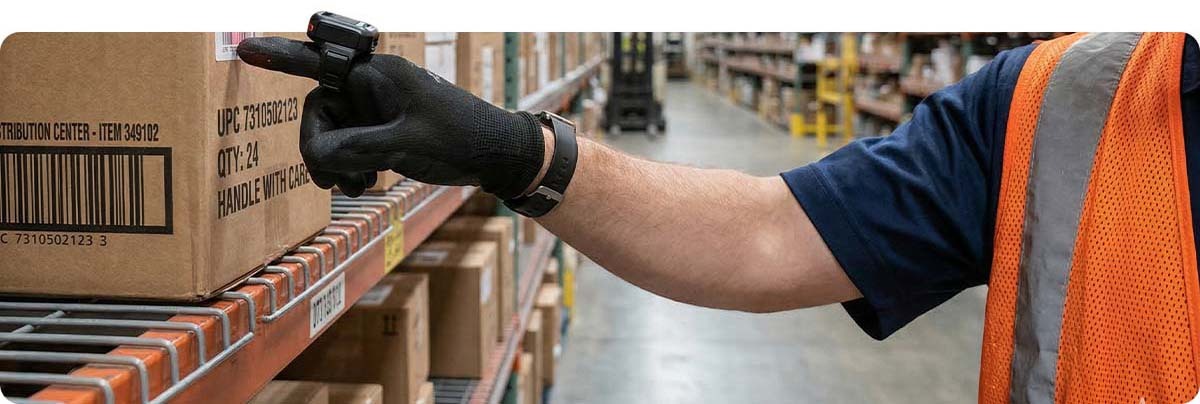
Ring scanners — worn on the finger or back of the hand — eliminate every unnecessary motion in that sequence. The result is measurable throughput improvement, lower error rates, and reduced worker fatigue that compounds across an entire shift.
This guide breaks down the real ROI of hands-free ring scanner picking, when the switch makes sense, and which ring scanner models from Zebra and Honeywell Advanced Automation recommends for your operation.
The Hidden Productivity Tax of Gun Scanners in Picking Operations
To understand the ROI of ring scanners, you first have to understand exactly what a traditional pistol-grip scanner costs you in motion and time — not in purchase price, but in the mechanics of using one during a picking workflow.
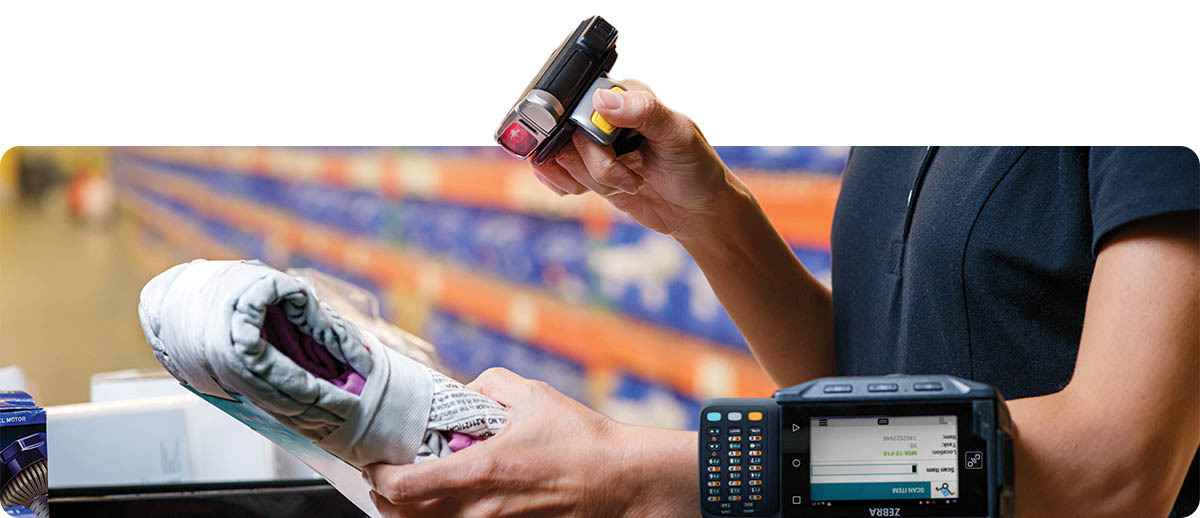
Watch an experienced order picker work a pick-and-pass or batch picking workflow with a gun scanner. The motion sequence looks something like this:
- Arrive at location, read the pick instruction on a mobile computer or voice prompt
- Reach for the item with one or both hands
- Transfer item to non-dominant hand or set it down briefly
- Grab the scanner from holster or set-down position
- Aim and scan the barcode
- Return scanner to holster or set it down
- Pick up the item and place it in the tote or cart
- Move to next location
Steps 3, 4, 5, and 6 are pure overhead. They contribute zero value to the pick. They exist only because the scanner is a separate object that must be managed as part of the workflow.
In a low-volume environment — say 50–100 picks per shift — this overhead is a rounding error. In a high-velocity distribution center with pickers making 400–800 picks per shift, it adds up fast. Studies of warehouse motion economics consistently show that eliminating the pick-up-and-set-down cycle for a handheld scanner saves between 1 and 3 seconds per pick in direct labor time.
At 500 picks per shift and 2 seconds saved per pick: that's over 16 minutes of recovered labor per worker, per shift. In a 50-picker operation running two shifts, that translates to roughly 27 labor hours recovered every single day — without adding headcount, changing your WMS, or modifying pick paths.
Ring Scanner vs. Gun Scanner: The Full Operational Comparison
The productivity math above is compelling on its own, but the operational advantages of ring scanners go well beyond scan speed. Here's the full picture:
| Factor | Gun Scanner | Ring Scanner |
|---|---|---|
| Both Hands Free During Pick | ✗ No | ✓ Yes |
| Pick-and-Scan in One Motion | ✗ No | ✓ Yes |
| Worker Fatigue Over Full Shift | Higher | Lower |
| Usable in Tight / Confined Spaces | Limited | Excellent |
| Drop / Damage Risk | Higher (handheld) | Lower (worn) |
| Scanner Loss / Misplacement | Common | Rare (always on body) |
| Forklift / Pallet Jack Compatible | Awkward | Natural |
| Heavy / Bulky Item Handling | ✗ One Hand Only | ✓ Two Hands Free |
| Upfront Cost per Unit | Lower | Moderate |
| ROI Payback Period (high volume) | — | Typically 3–9 months |
Calculating Your Ring Scanner ROI: A Practical Framework
Every operation is different, but here's a straightforward framework for estimating your ring scanner payback period before you purchase a single unit:
Step 1 — Establish Your Picks Per Worker Per Shift
Pull your WMS data for average picks completed per worker per shift over the last 30 days. Use this as your baseline figure.
Step 2 — Estimate Seconds Saved Per Pick
Industry benchmarks for ring scanner adoption in pick-and-pass and batch picking workflows show 1–3 seconds saved per pick compared to holstered gun scanner workflows. Conservative operations use 1 second. High-SKU, mixed-weight environments often see 2–3 seconds. Conduct a time study with a stopwatch and your actual workflow if you want a site-specific number.
Step 3 — Calculate Daily Labor Recovery
Multiply: (Picks per shift) × (Seconds saved per pick) ÷ 60 = Minutes recovered per worker per shift. Then multiply by number of workers and shifts per day to get your total daily labor recovery in minutes or hours.
Step 4 — Convert to Dollar Value
Multiply your recovered daily labor hours by your fully loaded hourly labor rate (wage + benefits + overhead). This gives you a daily dollar value of the productivity recovered.
Step 5 — Divide Hardware Cost by Daily Savings
Divide your total ring scanner fleet investment by the daily labor savings to get your payback period in days. Most high-volume operations see payback in 90–270 days.
Quick Example:
• 30 pickers × 500 picks/shift × 2 shifts = 30,000 picks/day
• 2 seconds saved per pick = 60,000 seconds = 16.7 labor hours recovered daily
• At $22/hr fully loaded: $367 in recovered labor value per day
• 30 ring scanners at $450 each = $13,500 fleet investment
• Payback period: ~37 days
The Ring Scanner Products We Recommend for Warehouse Picking
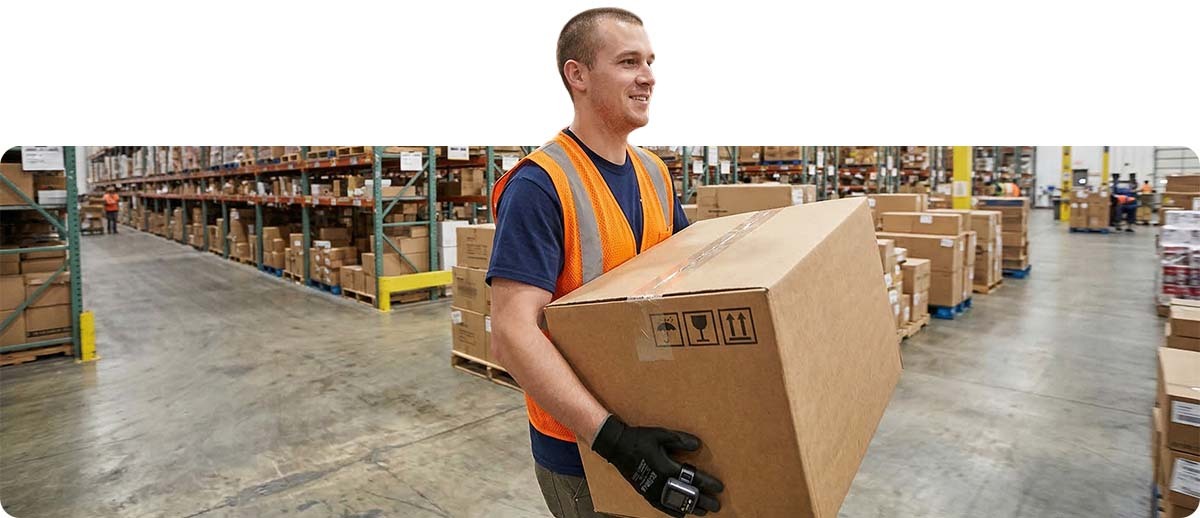
Advanced Automation carries the complete wearable scanner lineup from Zebra and Honeywell. Here are our top picks for warehouse and distribution center picking operations, organized by application:
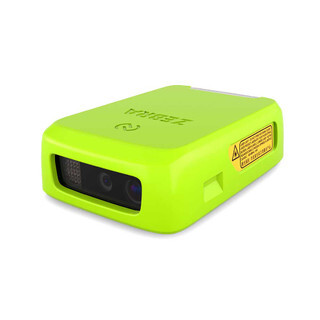
Best Entry-Level Wearable Scanner: Zebra RS2100
The Zebra RS2100 is the smallest and lightest enterprise wearable barcode scanner on the market, weighing just over one ounce (31g). Its innovative back-of-hand design leaves the entire palm free for gripping — a genuine ergonomic advantage for workers handling varied product sizes and weights. The RS2100 is 53% lighter than the RS5100, making it the right choice for operations prioritizing worker comfort and ease of adoption. It pairs with any Zebra mobile device, consumer smartphones, tablets, and Windows PCs straight out of the box — no complex integration required.
Zebra RS2100 Wearable Scanner
Part #: RS21C0-TS00ZWR
World's smallest and lightest enterprise wearable scanner at just 31g. Back-of-hand design leaves full palm free for item gripping. SE4770 2D imager reads all 1D and 2D barcodes. Compatible with Zebra mobile devices, consumer smartphones, and Windows PCs. Optional Device Tracker license for locating misplaced units. IP54 rated. Ideal entry-level ring scanner for operations upgrading from gun scanners for the first time.
Shop the RS2100 →Best Mid-Range Industrial Ring Scanner: Zebra RS5100
The Zebra RS5100 is the benchmark single-finger Bluetooth ring scanner for demanding warehouse and distribution center environments. Where the RS2100 prioritizes lightweight simplicity, the RS5100 delivers rugged industrial construction with five interchangeable wearing styles — single finger, double trigger, top-mounted trigger, and more — allowing each worker to find the configuration that maximizes their personal scan angle and comfort. The top-mounted trigger is an industry first, allowing the RS5100 to sit to the side of the finger with no protrusion above the hand, ideal for picking in tight shelf locations.
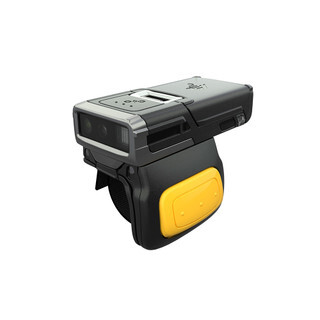
Zebra RS5100 Single-Finger Ring Scanner (Single Trigger)
Part #: RS51C0-LBBHWR
Industrial-grade single-finger Bluetooth ring scanner with five interchangeable wearing styles. SE4710 2D imager for fast, reliable 1D/2D barcode capture. Single trigger rotates between right and left sides — workers can switch scanning hands on the fly. Featherlight-yet-rugged construction at home in warehouse, manufacturing, and retail environments. Shares common accessories with the RS6100 for future upgrade flexibility.
Shop the RS5100 (Single Trigger) →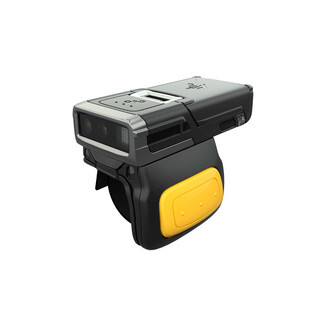
Zebra RS5100 Single-Finger Ring Scanner (Double Trigger)
Part #: RS51C0-LBDNWR
Same industrial RS5100 platform with double trigger configuration — enables workers to change scanning hands on the fly without re-mounting the scanner. Ideal for operations where workers frequently switch between right and left-handed scanning positions throughout their shift.
Shop the RS5100 (Double Trigger) →Best Premium Performance Ring Scanner: Zebra RS6100
The Zebra RS6100 is the flagship wearable scanner for operations that need maximum range, read performance, and durability. Its advanced multi-focus scan engine captures 1D and 2D barcodes from near contact to an extraordinary 40 feet — making it the only ring scanner capable of serving both close-range picking and long-range racking in the same unit. It's lighter than the RS6000 it replaced, works in freezers and rain, and shares common trigger assemblies, batteries, and mounts with the RS5100 for cost-effective fleet upgrades.
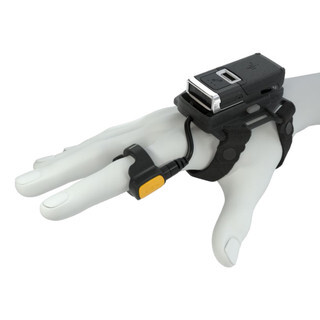
Zebra RS6100 Bluetooth Wearable Scanner
Part #: RS61B0-KBENZWR
Flagship wearable scanner with advanced multi-focus scan engine capturing barcodes from contact to 40 feet. Five interchangeable wearing options. Works in freezers, rain, and outdoor environments. Removable battery for multi-shift operations. Corded and cordless options. Shares accessories with RS5100 for easy mixed-fleet management. The choice for operations requiring elite performance across variable picking distances.
Shop the RS6100 →Best Honeywell Option: Honeywell 8675i Wearable Scanner
For operations already running a Honeywell ecosystem — or looking for an alternative to Zebra — the Honeywell 8675i delivers excellent hands-free scanning performance with a multi-shift ready design. The 8675i features an easy-to-replace battery specifically designed to extend device service life as the battery ages through normal use. User-facing LEDs communicate Bluetooth connection status, battery charge state, and battery health replacement alerts, reducing management complexity across large fleets. Available in Standard Range and FlexRange configurations to match your picking environment.
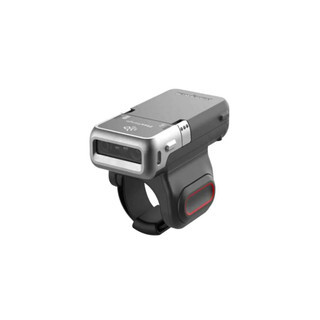
Honeywell 8675i Standard Range Wearable Scanner
Part #: 8675I300SR-2-N
Standard range 1D/2D wearable scanner with replaceable battery for extended service life. Includes battery and right-hand strap glove (size large). User-facing LEDs for Bluetooth, battery charge, and battery health status. Multi-shift ready design. Tethers to the Honeywell CW45 mobile computer via CW45-8675-CBL cable. Ideal for Honeywell ecosystem operations upgrading from gun scanner workflows.
Shop the 8675i →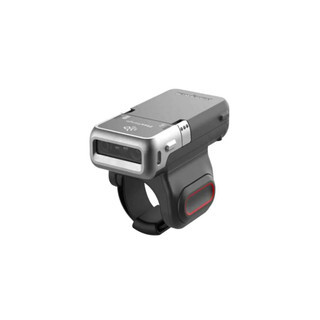
Honeywell 8675i FlexRange Wearable Scanner
Part #: 8675I400FR-2-N
FlexRange 1D/2D wearable scanner with extended read range for mixed near/far picking environments. Includes battery and triggered ring. Multi-shift battery design with health monitoring LEDs. Charger sold separately. Excellent for operations where pick locations vary between floor-level and elevated racking within the same workflow.
Shop the 8675i FlexRange →Complete the System: Zebra WT6000 Wrist-Mount Computer
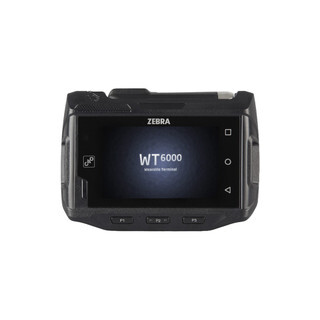
Ring scanners pair most effectively with a wrist-mount computer that keeps the display in the worker's line of sight without requiring a held device. The Zebra WT6000 is the purpose-built partner for the RS5100 and RS6100 in warehouse picking environments. It mounts on the forearm, leaving both hands completely free, and pairs with compatible ring scanners, headsets, and voice-directed picking systems for a fully integrated hands-free workflow. Zebra's data shows this multi-modal solution boosts worker productivity by up to 15% with 39% fewer errors compared to speech-only wearables.
Zebra WT6000 Wrist-Mount Computer
Part #: WT60A0-KX2NEUS
Enterprise-class wearable computer designed to pair with RS5100, RS6100, and RS6000 ring scanners for fully hands-free picking workflows. Smaller and lighter than competing wearables with an adjustable mounting system that fits any size arm. Industrial rugged design for demanding environments. Optional physical keypad for operations requiring keypad data entry. Up to 15% productivity boost and 39% fewer errors in multi-modal configurations.
Shop the WT6000 →When Gun Scanners Are Still the Right Tool
We'll give you the honest answer here: ring scanners are not the right solution for every application. There are workflows where a traditional handheld gun scanner remains the better choice:
- Low-volume, intermittent scanning — receiving desks, cycle count stations, and other locations with fewer than 100 scans per shift don't generate enough volume for ring scanner ROI to kick in meaningfully
- Extended-range scanning without a wrist computer — gun scanners with long-range optics remain superior for scanning pallet labels from 15–40 feet at a fixed station without a full wearable system
- Environments requiring frequent manual data entry — if your workflow involves entering lot numbers, serial numbers, or quantities at a keypad, a gun scanner paired with a mobile computer is more ergonomic than a ring scanner
- Occasional or temporary workers — ring scanner fitting, pairing, and wearing style configuration adds onboarding time that may not be justified for short-tenure roles
In mixed operations, many facilities run ring scanners for their high-velocity order pickers and gun scanners for receiving and cycle count teams — getting the ROI benefits where it matters most without forcing the technology into workflows where it doesn't fit.
How to Choose the Right Ring Scanner for Your Operation
1. Volume and Pick Rate
For operations under 200 picks per worker per shift, the RS2100 or Honeywell 8675i standard range is the right starting point — simple, affordable, and effective. For 300+ picks per shift, move up to the RS5100 or RS6100 for the durability and wearing configuration flexibility that high-volume picking demands.
2. Scan Distance Requirements
If all your picking happens within arm's reach — floor-level bins, conveyor picking, shelf picking below 8 feet — a standard range scanner (RS2100, RS5100, 8675i SR) is the right spec. If your pickers also need to scan labels above head height or at distance on high racking, the RS6100's 40-foot range or the 8675i FlexRange is the correct choice.
3. Existing Mobile Computer Ecosystem
Ring scanners connect via Bluetooth to a host mobile computer. If your operation already runs Zebra mobile computers (MC9400, MC3300, TC-series), the RS2100, RS5100, and RS6100 integrate natively with Zebra's Mobility DNA platform for simplified pairing, management, and configuration. If you're a Honeywell shop (CT45, CW45), the 8675i is purpose-built for that ecosystem.
4. Worker Preference and Ergonomic Fit
One underrated factor: give your workers input. Some workers strongly prefer a back-of-hand mount (RS2100 style). Others prefer a traditional ring mount with a finger trigger (RS5100/RS6100). Ordering a demo unit of each and letting your team trial them for a shift before committing to a fleet purchase dramatically improves adoption rates and worker satisfaction.
Frequently Asked Questions: Ring Scanners vs. Gun Scanners
Do ring scanners read all the same barcodes as gun scanners?
Yes. All of the ring scanners listed here use full 2D area imagers (SE4770 or SE4710 engines) that read every common 1D and 2D barcode symbology — Code 128, UPC, QR, Data Matrix, GS1 DataBar, PDF417, and more. There is no barcode type limitation compared to a gun scanner.
How do workers trigger a scan with a ring scanner if their hands are full?
Most ring scanners use a small trigger button located at the base of the finger or on the side of the hand. Workers activate it with a subtle thumb or finger press while holding the item — no need to set anything down. Some advanced configurations also support automatic "pull trigger" activation when the hand is oriented toward a barcode.
What happens if a ring scanner gets lost or misplaced?
Because ring scanners are worn on the body, loss during active picking is rare. The Zebra RS2100 supports an optional Device Tracker license that uses firmware BLE beaconing to locate a misplaced scanner even when it's powered down or low on battery — a significant advantage over gun scanners left on shelves or in pick carts.
Can ring scanners be sanitized between workers?
Yes. The Zebra RS5100 and RS6100 feature removable, washable mounts and straps. Many operations assign individual mounts per worker and share scanner modules across shifts. The Honeywell 8675i's replaceable components similarly support shared-use sanitation protocols.
How much does worker onboarding take for ring scanners?
Typically under 10 minutes. Fitting, pairing, and basic trigger operation are intuitive. The Zebra RS2100 is specifically designed for near-zero onboarding — workers are productive within minutes. The RS5100 and RS6100 have more wearing configuration options but still require minimal training compared to new mobile computer software workflows.
Do ring scanners work in cold storage environments?
The Zebra RS6100 is specifically designed to operate in freezer and outdoor environments and is rated for use in rain and snow. The RS5100 and 8675i are rated for standard warehouse and light industrial temperature ranges. For dedicated cold storage ring scanner deployments, the RS6100 is the correct specification.