
Forklift Technology: Use a Fixed Vehicle Mounted Computer or a Rugged Tablet?
Posted by Advanced Automation on Feb 22nd 2026
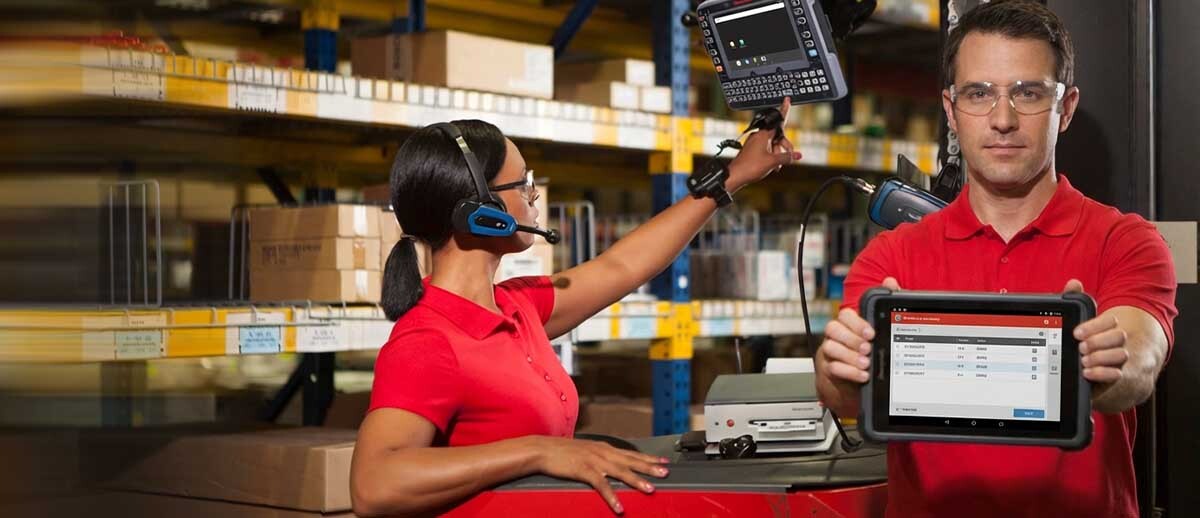
In the high-stakes environment of modern material handling, the interface between your Warehouse Management System (WMS) and your forklift operator is the heartbeat of your throughput. For years, the choice was simple: you bolted a dedicated vehicle-mounted computer (VMC) to the roll cage and called it a day. But as mobile technology evolved, the lines between fixed and portable devices have blurred.
Today, decision-makers navigate a spectrum of hardware options. On one side are the specialized "tanks" like the Honeywell Thor VM3 and the Zebra VC8300. On the other are versatile, high-performance rugged tablets such as the Zebra ET60/ET65 and the Honeywell RT10. Choosing the right path requires understanding the trade-offs in vibration resistance, power management, and the specific ergonomics of your facility’s workflow.
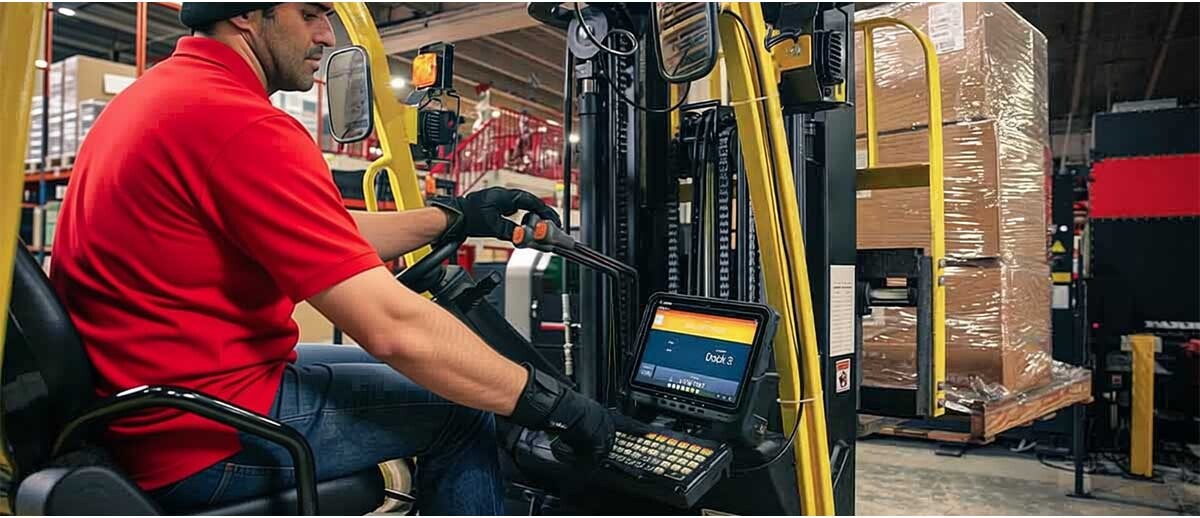
The Fixed Specialist: Dedicated Vehicle-Mounted Computers
Vehicle-mounted computers (VMCs) are engineered for a single purpose: to live and die on the vehicle. Models like the Honeywell Thor VM3 and the Zebra VC8300 represent the evolution of this category.
- Built for the "Shudder"
The primary characteristic of a fixed VMC is its extreme environmental resilience. Unlike a handheld device, a VMC is designed to withstand the relentless, high-frequency vibration of a forklift—especially those with solid tires on concrete. The Thor VM3, for example, features internal suspension and components rated for MIL-STD-810H shock and vibration to prevent internal solder joints from failing over time. - Power and Persistence
VMCs address one of the biggest challenges in warehouse tech: the power surge. Every time a forklift starts, there is a massive draw—and often a subsequent spike—in voltage. Devices like the Zebra VC8300 include built-in power conditioning and often a super-capacitor or "bridge battery." This allows the unit to remain powered during forklift battery swaps or momentary voltage drops, preventing the disruptive reboot cycles that can halt an operator's progress. - Input and Ergonomics
VMCs often provide larger physical interfaces. The Zebra VC8300 integrates a physical keyboard and a touchscreen in a single housing, which is advantageous for operators wearing heavy gloves or those who prefer tactile feedback for high-volume data entry. Furthermore, the Thor VM3 offers a field-replaceable front panel, allowing on-site maintenance of the most wear-prone components (the screen and keyboard) without removing the entire computer from the lift.

The Versatile Challenger: Rugged Tablets
Rugged tablets like the Zebra ET60/ET65 and the Honeywell RT10 represent a different philosophy: "One device, any task." These are not consumer tablets in rubber cases; they are industrial-grade tools designed for multi-modal work.
- Mobility and Multi-Tasking
The standout feature of a tablet is its portability. If an operator needs to jump off the lift to inspect a damaged pallet, perform a cycle count in a tight rack, or photograph a shipping manifest, they can simply unclip the device and go. For many logistics providers, this eliminates the need for two separate devices—a fixed terminal and a handheld scanner—potentially lowering the initial capital expenditure. - Technical Agility
Tablets often lead the way in processing power and connectivity. The Zebra ET65, for instance, offers 5G and Wi-Fi 6E, making it a strong candidate for outdoor yards or facilities with spotty Wi-Fi coverage. The Honeywell RT10 features a specialized dual-lens imager that can scan barcodes from a few inches away to over 30 feet, providing flexibility that a fixed terminal typically lacks without an attached peripheral scanner.

The Hybrid Approach: Mounting Tablets in the Cab
The "hybrid approach" involves mounting a rugged tablet into a specialized vehicle cradle. This attempts to bridge the gap between portability and the stability of a fixed mount.
Pros of the Hybrid Setup:
- Asset Density: Hardware doesn't sit idle; if a forklift is down for maintenance, the tablet can be redeployed to a different vehicle or used by a floor supervisor.
- Simplified Swaps: If a screen is damaged, the operator can swap the tablet in seconds, keeping the forklift in service while the device is sent for repair.
- Modern OS Familiarity: Tablets typically run the latest versions of Android, offering an intuitive interface that mirrors the smartphones most employees use daily.
Cons of the Hybrid Setup:
- Contact Wear: The most common failure point is the docking connector. Constant docking and undocking in dusty or high-vibration environments can wear down the pins, eventually leading to intermittent charging.
- The "Walking Tablet" Risk: Because they are easy to remove, tablets are easier to lose. They may be left on pallets or in different departments, leading to equipment downtime.
- Accessory Complexity: While VMCs often have built-in heaters for cold storage, a tablet may require a specialized heated dock to prevent condensation and ensure the screen remains responsive in freezers.
Environmental Factors: Where Each Shines
If your facility includes Cold Storage, the fixed VMC has traditionally held an edge due to integrated internal heaters and "defroster" screens. However, newer tablets like the Zebra ET60 have closed this gap with optional heated docks and specialized freezer-rated batteries.
In High-Vibration Yard Work, the fixed-mount Honeywell Thor VM3 or Zebra VC8300 may be preferred for their "tank-like" build that ignores the jolts of uneven pavement. Conversely, in a Modern 3PL Warehouse where operators perform mixed duties (driving, picking, and auditing), the Honeywell RT10 or Zebra ET6x provides the flexibility to move with the worker.

5 Questions to Guide Your Technology Decision
- What percentage of the shift is spent "Off-Truck"? If the operator frequently performs data-driven tasks away from the vehicle, a portable tablet may offer higher utility.
- Does the environment require physical keys? For high-speed data entry or gloved use, an integrated physical keyboard on a VMC may be more efficient than a tablet's on-screen keyboard.
- What is the vibration profile of the vehicle? Are you running electric lifts on smooth floors, or IC (internal combustion) trucks on cracked pavement? Higher vibration levels may favor the internal suspension of a dedicated VMC.
- Is there a need for cellular connectivity? If your forklifts move between buildings or operate in a shipping yard, a tablet with 5G capabilities may provide more consistent uptime than a Wi-Fi-only VMC.
- How is maintenance handled? Do you prefer "swapping" a tablet to keep a lift moving, or do you prefer the durability of a "bolted-on" device that requires a technician for removal?
Key Technical Differences at a Glance
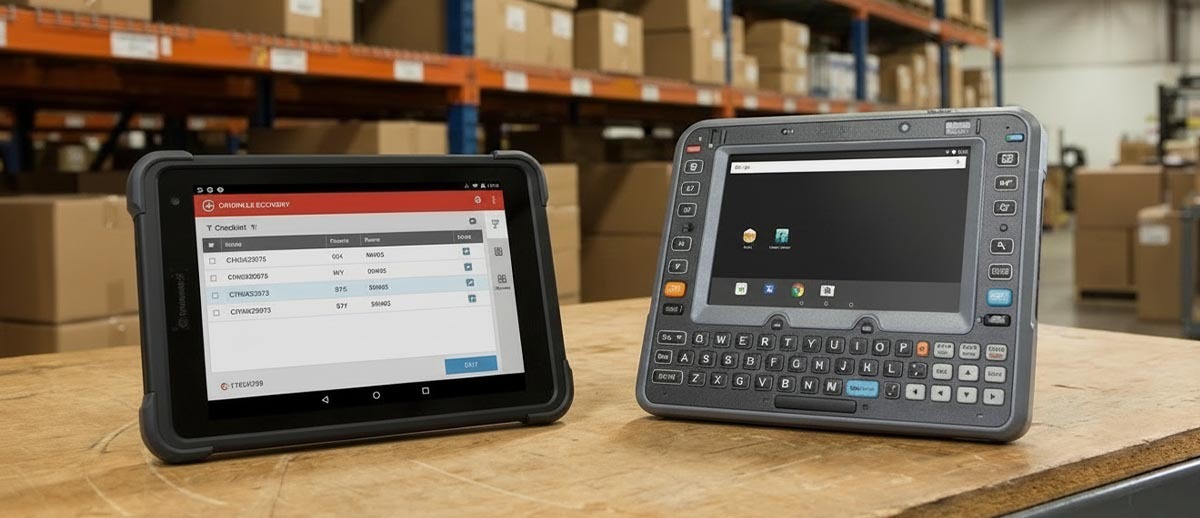
- Mobility: VMCs (VM3/VC8300) are fixed to the vehicle; Rugged Tablets (ET6x/RT10) are detachable and portable.
- Power Management: VMCs feature direct-wired power with super-capacitor backup; Tablets rely on internal batteries and dock-based charging.
- Data Input: VMCs offer integrated QWERTY keyboard options; Tablets use touchscreens with optional external dock keyboards.
- Resilience: VMCs are engineered with advanced internal vibration/shock suspension; Tablets prioritize impact and drop protection for handheld use.
- Connectivity: VMCs typically utilize high-gain external Wi-Fi antennas; Tablets often lead with 5G/LTE and Wi-Fi 6E capabilities.