Farm to Fork Traceability: Hardware & Software for FSMA 204
Posted by Advanced Automation on Jan 27th 2026
From Farm to Fork: Implementing FSMA 204 Compliant Labeling Systems
For decades, food traceability in the United States operated on a "one-up, one-back" philosophy. If a problem occurred, you looked at who gave you the product and who you sold it to. But as supply chains grew more complex and global, that traditional system proved too slow to stop foodborne illness outbreaks before they reached the dinner table.
Enter FSMA 204, or Section 204(d) of the FDA Food Safety Modernization Act. This is no longer just a "best practice" recommendation; it is a federal mandate that demands a digital-first approach to food safety. For produce manufacturers, food processors, and anyone handling items on the Food Traceability List (FTL)—ranging from leafy greens and nut butters to fresh-cut fruits and certain cheeses—the clock is ticking. By the compliance deadline (which the FDA recently extended to 2028, though early adoption is already becoming a retail requirement), your labeling system must do more than just show a price and a barcode. It must serve as a living record of the product's journey.
The challenge isn't just printing a label; it’s the infrastructure required to capture, store, and share the right data at every turn.
Understanding the "Data DNA" of Food Safety
At the heart of FSMA 204 are two acronyms that every operations manager needs to memorize: CTEs (Critical Tracking Events) and KDEs (Key Data Elements).
Think of a CTE as a milestone in the product's life—harvesting, initial packing, transformation (like slicing or mixing), and shipping. At each of these milestones, you are required to record specific KDEs. These aren't just "batch numbers." They include the Traceability Lot Code (TLC), the exact GPS coordinates or location description of where the food was handled, the date and time of the event, and even the contact information of the person responsible.
The "Fork" part of the "Farm to Fork" journey depends on this data being passed seamlessly downstream. If the FDA knocks on your door during an outbreak investigation, you have exactly 24 hours to provide a sortable electronic spreadsheet containing all this information. If your current system relies on paper logs and manual spreadsheets, meeting that 24-hour window is nearly impossible. This is why a modernized, automated labeling system is the only viable path forward.
The Software Engine: BarTender vs. Loftware
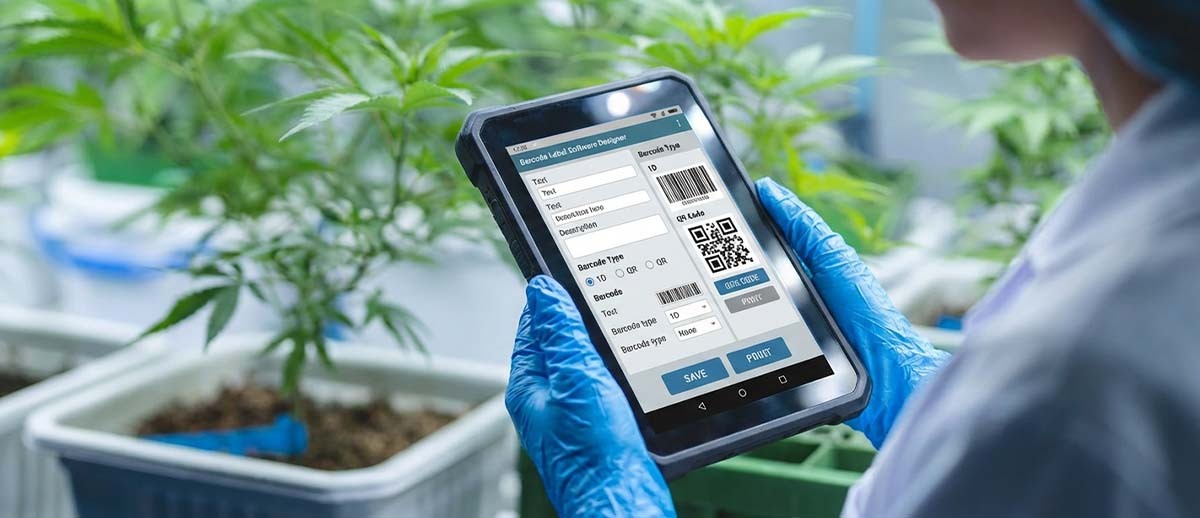
To manage the complexity of FSMA 204, the "brains" of your operation must be robust labeling software. In the barcoding industry, two names dominate the conversation for food safety: BarTender by Seagull Scientific and Loftware (including NiceLabel).
- BarTender: The Flexibility Champion
For many produce packers and mid-sized processors, BarTender is the go-to solution because of its Intelligent Templates. Instead of creating thousands of static label files for different products, BarTender allows you to create a single template that pulls data dynamically from your ERP or WMS.
When a "Transformation Event" occurs—for example, taking bulk romaine lettuce and bagging it into salad kits—BarTender can automatically generate a new Traceability Lot Code that links back to the original harvest KDEs. Its ability to handle GS1-128 barcodes and 2D DataMatrix codes ensures that your labels meet the standards required by major retailers like Walmart, who are already mandating these enhanced labels. - Loftware: Enterprise-Scale Traceability
For large-scale food manufacturers with multiple facilities across the globe, Loftware (specifically their cloud-based Spectrum or NiceLabel platforms) offers a more centralized approach. The advantage here is standardization. Loftware allows corporate HQ to push label updates to a facility halfway across the world in seconds, ensuring that every plant is using the exact same FSMA 204-compliant format.
Loftware excels at "business rules." If a specific KDE is missing from the database—say, the harvest date wasn't entered—the software can be set to "lock" the print job, preventing a non-compliant pallet from ever leaving the dock. This kind of automated gatekeeping is a lifesaver during a high-pressure shipping shift.
The Hardware: Rugged Reliability on the Front Lines
Software is only as good as the hardware that prints and scans the data. In a food processing environment, the hardware faces unique challenges: extreme cold in "wet" rooms, high humidity, and the need for frequent washdowns.
- Industrial Thermal Printers
To meet FSMA 204 standards, you need high-resolution thermal transfer printers. Why thermal transfer? Because direct thermal labels can fade when exposed to heat or light, and a faded barcode is a compliance failure. Printers from Zebra (like the ZT411 or ZT610) or Honeywell (PM45) are the industry standards. They are designed for 24/7 high-volume printing and can handle the rugged synthetic labels required for refrigerated or frozen environments. - Mobile Scanning and Validation
You cannot manage what you do not measure. Mobile computers, such as the Zebra MC9400 or the Honeywell Dolphin, allow workers to scan inbound shipments and immediately verify that the sender’s KDEs are present. During a "Transformation" event, workers scan the raw ingredients and the finished product, creating a digital "tether" between the two. This ensures that the record is created in real-time, rather than being reconstructed from memory at the end of the day.
The Role of GS1 Standards and 2D Barcodes
While the FDA does not explicitly mandate a specific barcode format, the industry is moving rapidly toward GS1 standards. The GS1-128 barcode has long been the standard for shipping containers, but we are seeing a significant shift toward 2D barcodes (like QR codes or DataMatrix).
The beauty of a 2D barcode is its data density. While a traditional 1D barcode can only hold a limited number of characters, a 2D code can store the GTIN, the Lot Number, the Expiration Date, and even a URL that links directly to a digital traceability record. This is a massive win for transparency. A retailer or even a consumer can scan the code with a smartphone and see exactly which farm their spinach came from.
Overcoming the Implementation Hurdle
Implementing an FSMA 204-compliant system is a daunting task, but it doesn't have to happen overnight. Most successful food processors take a phased approach:
- Conduct a Gap Analysis: Look at your current "Critical Tracking Events." Where are you currently using paper? Where is the data "siloed" in a spreadsheet that isn't linked to your labels?
- Standardize Your Data: Work with your suppliers to ensure they are providing the necessary KDEs in a digital format. If they send you paper, you’re the one who has to digitize it—and that costs time and money.
- Upgrade the "Brain": Move to a centralized labeling software like BarTender Label Design Software or Loftware Nicelabel Label Design Software that can integrate directly with your database.
- Test Your Recall: Perform a "mock recall." Can you produce a sortable spreadsheet for a specific lot code in under 24 hours? If not, identify the bottleneck.
Compliance as a Competitive Edge
While FSMA 204 is a regulatory burden, the smart players in the food industry are viewing it as an opportunity. A robust, digital traceability system does more than just satisfy the FDA; it reduces waste by allowing for more surgical recalls, improves inventory accuracy, and builds deep trust with consumers who are increasingly concerned about where their food comes from.
In the world of "Farm to Fork," the label is no longer just a piece of paper. It is the digital passport of the product, and your labeling system is the gatekeeper of its safety.