
Do Barcode Labels Expire? Direct Thermal vs Thermal Transfer
Posted by Advanced Automation on Dec 14th 2025
Short answer: Maybe. Kinda. Depends.
Long answer: It’s not the label that expires—it’s the material, the chemistry, and the environment it lives in.
If you’ve ever opened a supply cabinet and wondered whether the rolls of barcode labels sitting on the shelf are still “good,” you’re not alone. Thermal label expiration is one of the most misunderstood topics in barcode printing. Some users panic when labels are more than a few months old. Others assume labels last forever. As with most things in the barcode world, the truth lives somewhere in between.
Whether a thermal label truly “expires” depends almost entirely on two factors: the type of label material and the conditions under which it’s stored. And while neither direct thermal labels nor thermal transfer labels have a hard expiration date stamped on the box, one of them is far more sensitive to time and environment than the other.
Let’s break it down.

Direct Thermal vs. Thermal Transfer: Why Material Matters
To understand label longevity, you first need to understand how the image gets onto the label in the first place.
Direct Thermal Labels: The Reactive One
A direct thermal label contains a heat-sensitive coating embedded directly into the label material. When the printhead applies heat, that coating reacts and turns dark, forming the barcode, text, or image. No ribbon is used.
That heat-reactive chemistry is both the advantage and the Achilles’ heel of direct thermal labels.
Because the material itself reacts to heat, it can also react to:
- Ambient temperature
- Light (especially UV exposure)
- Friction or pressure
- Certain chemicals
- Humidity and moisture
Over time, these environmental factors can slowly darken the label, fade the printed image, or reduce barcode contrast. This is why direct thermal labels are the only thermal label type that can truly “age out” in storage under poor conditions.
Thermal Transfer Labels: Built for Longevity
A thermal transfer label works differently. The label material itself is not reactive. Instead, heat is used to transfer ink from a ribbon onto the label surface. Once that ribbon formulation is bonded to the label, the image is stable.
Because the label material isn’t chemically reacting to heat or light on its own, thermal transfer labels are far more stable in storage, especially when paired with the correct ribbon.
In simple terms:
- Direct thermal labels react to the environment
- Thermal transfer labels require heat to print, but don’t react after printing
That distinction matters—a lot—when we talk about shelf life.
Do Thermal Labels Have an Expiration Date?
If we’re being technical, most thermal labels don’t have a true expiration date. What they have is a recommended shelf life.
Under proper storage conditions:
- Direct thermal labels typically perform well for up to one year
- Thermal transfer labels often remain usable well beyond one year
- Synthetic thermal transfer labels can remain stable for several years
That doesn’t mean labels magically stop working at the one-year mark. It means the risk of print quality issues increases as time, exposure, and handling add up.

Why Paper Labels Degrade Faster Than Synthetic Labels
Not all thermal transfer labels are created equal. The biggest differentiator is paper vs. synthetic materials.
Paper Thermal Transfer Labels
Paper labels are porous and more vulnerable to:
- Humidity absorption
- Airborne contaminants
- Oils from handling
- Environmental fluctuations
Over long periods, paper can yellow, curl, or become brittle. While the ribbon image may still transfer cleanly, the label itself may not feed or adhere as reliably.
Synthetic Thermal Transfer Labels
Synthetic materials like polypropylene or polyester are engineered for durability. They resist:
- Moisture
- Chemicals
- UV exposure
- Temperature swings
Because of this, synthetic thermal transfer labels are the most stable option for long-term storage. In controlled environments, they can sit on a shelf for years with minimal degradation.
If any label type earns the title of a true durable label, it’s a synthetic thermal transfer label.
Storage Conditions Matter More Than Time
Regardless of label type, storage conditions often matter more than age.
For both direct thermal and thermal transfer labels, optimal storage looks like this:
- Temperature between 50–70°F
- Low, consistent humidity
- No direct light exposure
- Minimal handling
- No contact with chemicals or solvents
Stored in original packaging when possible
When labels are kept in a climate-controlled environment, both DT and TT labels should perform reliably for at least one year. Thermal transfer labels—especially synthetic—can last far longer.
Direct thermal labels, like paper thermal transfer labels, should not be strategically stored beyond one year, but they can often still be used successfully after that point if storage conditions have been ideal.
Should You Ever Store Labels Longer Than a Year?
From a performance standpoint, maybe.
From a business standpoint, usually not.
Even if labels technically remain usable, over-stocking labels ties up cash. Labels sitting on a shelf don’t generate revenue, don’t earn interest, and don’t improve operations. That money could often be put to better use elsewhere in the business.
As a general inventory strategy, storing more than a year’s worth of labels is rarely recommended.
The Sweet Spot: 3–6 Months of Label Inventory
For most operations, the ideal target is three to six months of label inventory on hand. This provides:
- Operational buffer
- Minimal risk of degradation
- Better cash flow management
- Flexibility if requirements change
However, lead time matters.
If you’re using a stock barcode label size, replenishment is typically fast. There’s little reason to over-buy.
If you’re using custom, made-to-order labels with three-week production times, keeping extra inventory may make sense. Larger purchase quantities can reduce per-label costs, but that doesn’t mean you need to receive everything at once.
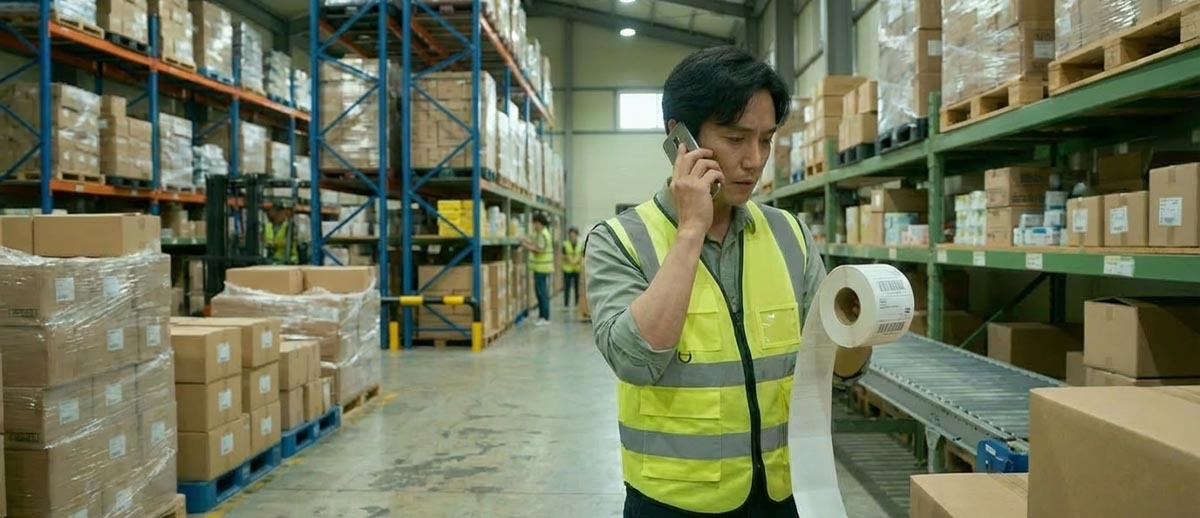
A Smarter Alternative: Blanket Orders & Staged Releases
Instead of loading up your shelves, many companies choose a blanket purchase order strategy. You lock in bulk pricing up front but receive labels in smaller, scheduled shipments as needed.
This approach gives you:
- Volume pricing advantages
- Reduced storage risk
- Better inventory control
- Improved cash flow efficiency
Working with a reputable label supplier makes this easy—and eliminates the pressure to guess how many labels you’ll need six or twelve months down the road.
The Real Takeaway: Don’t Panic
The ultimate purpose of this article is simple: calm down.
If you have thermal labels sitting on the shelf, they are probably fine—especially if they’ve been stored properly. Direct thermal labels aren’t ticking time bombs, and thermal transfer labels certainly aren’t going bad overnight.
Yes, there are better ways to manage label inventory. And yes, great pricing can be achieved without over-stocking. But expiration anxiety shouldn’t be one of your operational concerns.
Thermal labels are more resilient than most people think—especially when you understand the material, respect the environment, and plan inventory intelligently.